
15Sep 26
We are delighted to announce the release of the publication: “A Culturally Grounded Method for Dialogue Between Indigenous Peoples and Researchers on Emerging Technologies: Lessons from the Gene Drive Context” in Gates Open Research. The paper presents a participatory method for conducting a collaborative and culturally appropriate dialogue between gene drive researchers and Indigenous Peoples and local communities.
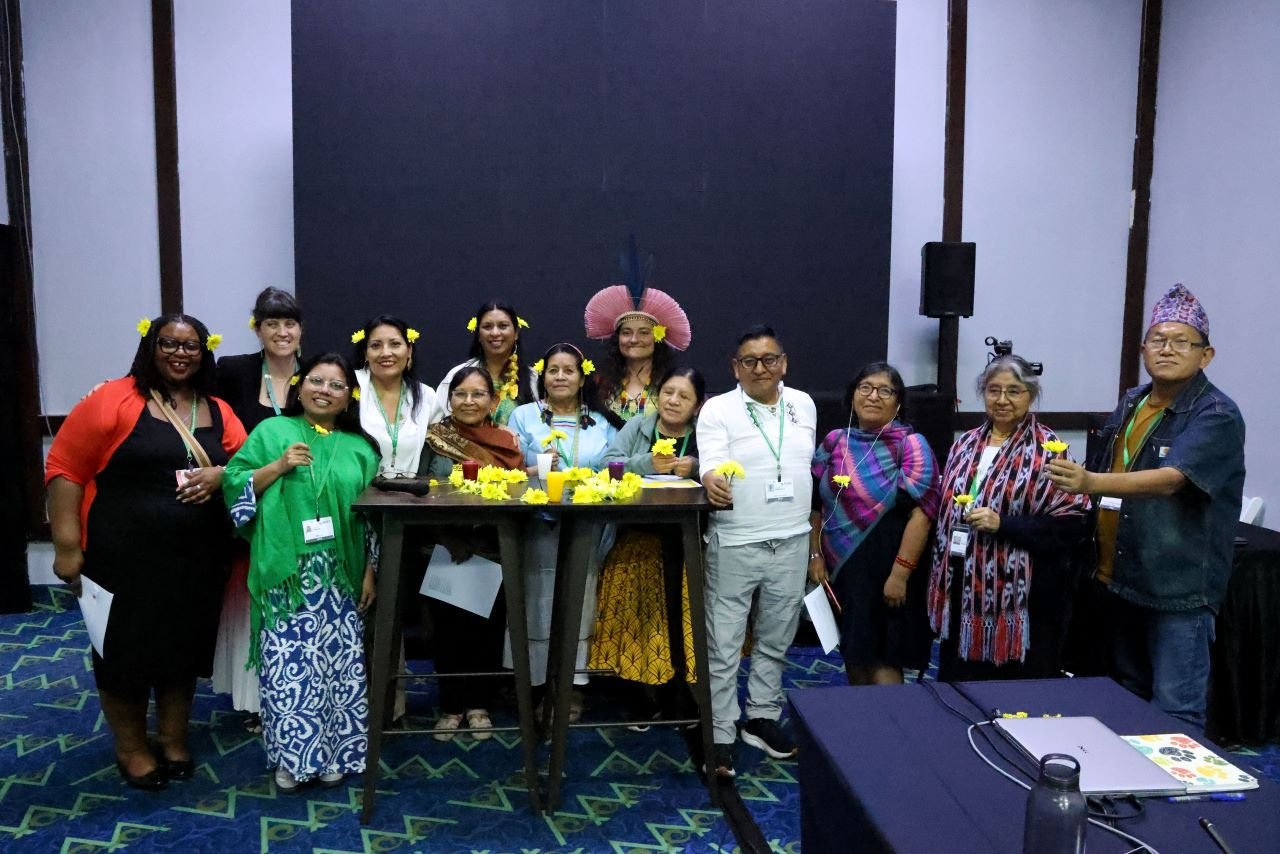
Participants of the “Bridging Worlds: Fostering Dialogue Between IP&LCs and Gene Drive Researchers” event co-organized by the Red de Mujeres Indigenas sobre Biodiversidad para America Latina y el Caribe (RMIB-LAC) and Outreach Network for Gene Drive Research at the First meeting of the Subsidiary Body on Article 8(j) at SBSTTA 27 in Panama in October 2025.
Coordinated by the Outreach Network for Gene Drive Research and representatives of the International Indigenous Forum on Biodiversity (IIFB), this dialogue aimed to build trust and facilitate mutual understanding and create a safe space for sharing traditional knowledge, rather than to reach decisions on the research or implementation of gene drive technology.
Over a three-year period, the dialogue evolved through multiple formats, recognising the specific needs to establish a meaningful and culturally appropriate dialogue between these two groups, while ensuring that Indigenous Peoples and local communities could share their traditional knowledge, traditions and innovations in a safe and trusted environment.
The publication offers practical insights for effective engagement including the importance of co-developed engagement principles, understanding of cultural sensitivities and humility, and a commitment to building trust and relationships based on mutual respect. The findings are relevant not only for gene drive research, but also for broader conversations on other emerging technologies. As noted by the peer reviewers (comments available here), “The authors provide valuable reflective insights into the challenges of creating more equitable and accessible forms of engagement”, sharing not only successes but challenges in this dialogue process. Read the full paper here.
