15Sep 26
I had the pleasure of attending the 2026 RBM Partnership to End Malaria Vector Control Working Group (VCWG) Annual Workshop, which took place in Nairobi from March 3-5, and brought together over 300 members of the vector control community, including researchers, practitioners and funders. The annual gathering remains a key platform for sharing evidence on vector control tools and strategic priorities shaping malaria control across the African continent. This year’s event was focused on the theme: “Vector control at a crossroads: Innovating for impact in a resource-constrained era.”
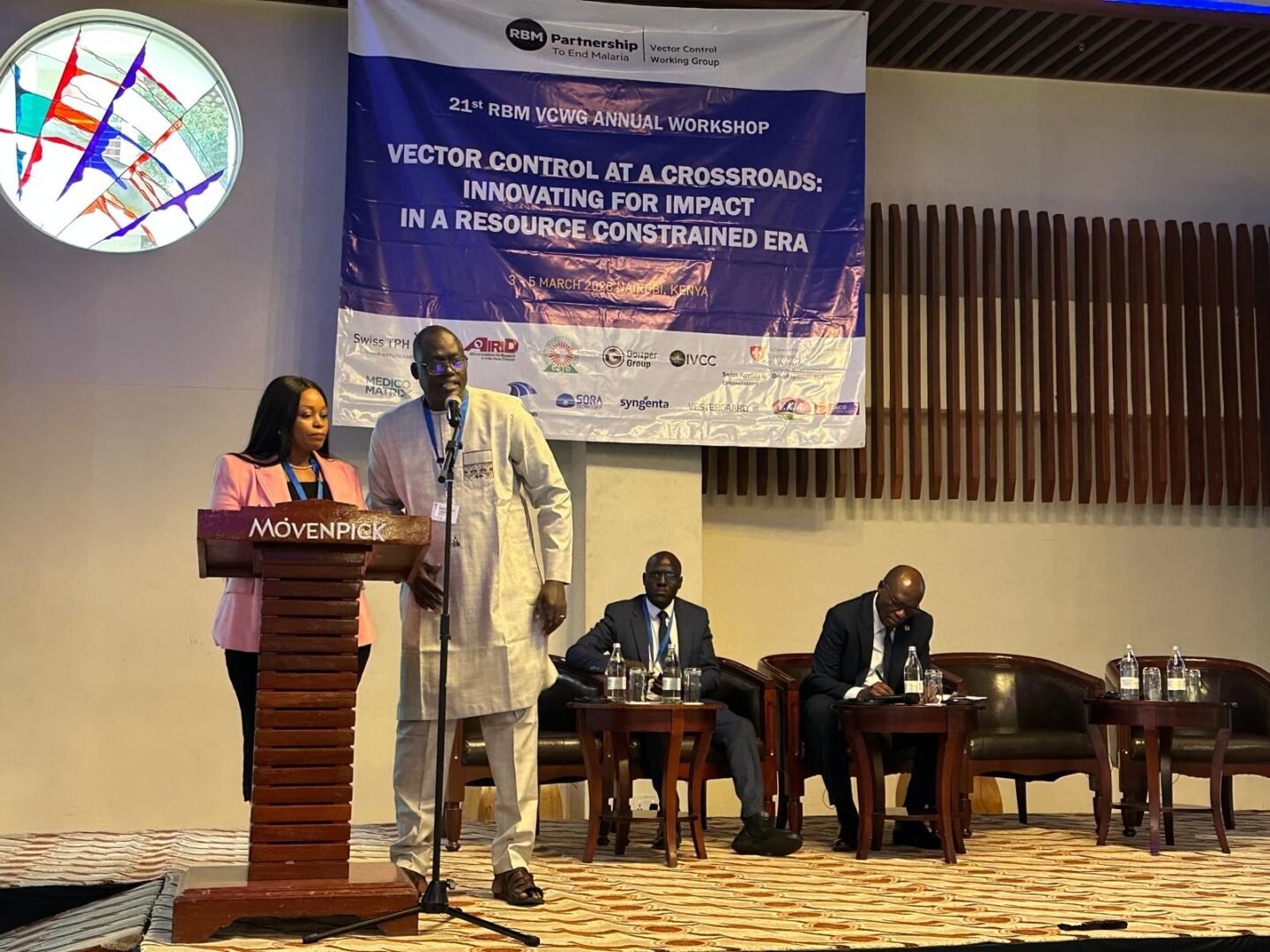
Dr. Corine Ngufor and Dr El Hadji Amadou Niang, RBM Partnership to End Malaria, chaired the 2026 RBM Partnership to End Malaria VCWG Annual Workshop. Photograph: RBM Partnership to End Malaria
The workshop featured panel discussions, plenary sessions and interactive discussions designed to generate practical recommendations. As part of the thematic workstream updates, Day 2 featured a session from VCWG 2 “Expanding the vector control toolbox”, focused on progress in genetic and symbiont-based approaches for malaria control. Experts from several organizations, including Target Malaria, Transmission Zero and the African Center for Excellence in Molecular Engineering (ACEME) shared updates on their work and ongoing research. The session generated strong interest, prompting discussions about organizing a follow-up webinar specifically dedicated to gene drive technologies.
The meeting concluded with a tour of the International Centre of Insect Physiology and Ecology (ICIPE) Duduville Campus, where participants engaged with researchers and students showcasing their entomological work.
Overall, the 2026 RBM Vector Control Working Group (VCWG) reaffirmed the importance of collaboration and knowledge-sharing across the malaria vector control community, providing a platform to exchange the latest research, operational insights and best practices relevant to current and future malaria control efforts.