16Feb 26
Over the past five years, malaria cases have risen across the African continent, reaching an estimated 265 million in 2024. São Tomé and Príncipe (STP), where the University of California Malaria Initiative (UCMI) has been working since 2018, has not been exempt, with cases of the disease increasing despite sustained control measures.
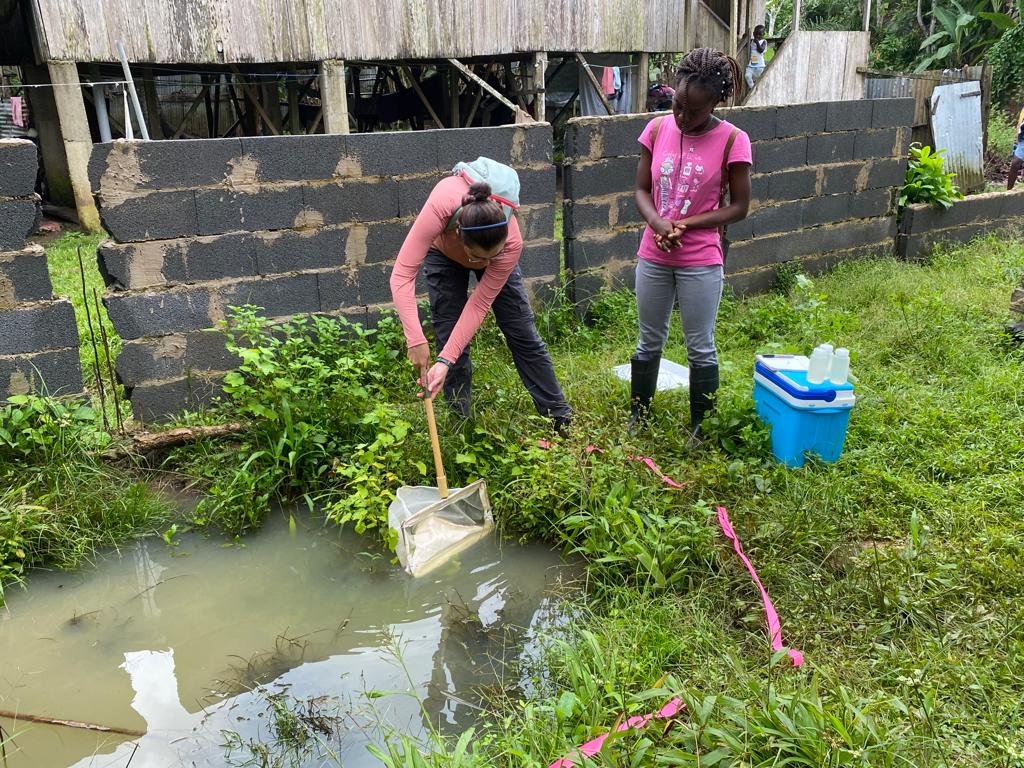
UCMI field entomologist Maria Corrêa and biology student Madizalda Ceita from the University of São Tomé and Príncipe sampling macroinvertebrates at one of the Anopheles coluzzii breeding sites in the locality of Ribeira Afonso, on the island of São Tomé. Photograph: João Pinto, UCMI
At UCMI, we are working to develop new genetic technologies to modify malaria mosquitoes, so they are unable to transmit the disease. Part of this work includes research to better understand the ecosystems these mosquitoes inhabit. In a recently published study, we examined the larval habitats of Anopheles coluzzii mosquitoes, the primary malaria vector on the islands of São Tomé and Príncipe.
The aquatic ecosystems on islands have fewer species than mainland systems but are often characterized by greater specialization and unique species interactions. Indeed, compared to mainland Africa, the freshwater ecosystems of STP host fewer species but exhibit higher levels of specialization, with interactions often magnified by the reduced complexity of insular food webs.
The main objectives of the study were to document the aquatic biodiversity present in typical larval habitats of An. coluzzii; compare biodiversity patterns between temporary and permanent habitats, across wet and dry seasons, and between years; and identify potential predators of mosquito larvae.
Mosquitoes spend the earliest stages of their lives in water, developing as larvae and pupae before emerging as adults. On São Tomé and Príncipe, An. coluzzii mosquitoes use a range of freshwater habitats, from small puddles and ditches to swamps and streams. To better understand these environments, we sampled mosquito larval habitats across five locations on the islands during both the wet and dry seasons, over two consecutive years, from 2022 to 2023.By returning to the same sites multiple times, we were able to build a clearer picture of these aquatic habitats.
Across all sites, we collected over 5,000 aquatic organisms belonging to over 50 different families. These included insects, crustaceans, spiders, annelid worms, springtails, and mollusks, with insects and crustaceans dominating collections. Our results demonstrate that these ecosystems harbour a dynamic community of aquatic macroinvertebrates. Our study also found that water habitats that retain water for longer periods of time support higher biodiversity. Permanent water habitats tended to host a wider variety of species than temporary water habitats that dry out more quickly after the end of the wet season.
By establishing this ecological baseline, we aim to support the responsible development of vector control approaches that are grounded in an understanding of the environments in which they may one day be used. Our findings provide essential information on the structure of aquatic communities in larval habitats where An. coluzzii mosquitoes occur and will serve as a reference for future ecological monitoring and further research.