28Sep 26
In Kenya, malaria continues to pose a significant public health burden, with around 75% of the population at risk and an estimated 3.3 million cases of the disease in 2023. While the country has made encouraging progress — reducing incidence from 104 to 72 cases per 1,000 population between 2023 and 2025 — significant challenges such as drug and insecticide resistance, financing gaps, and health system pressures persist.
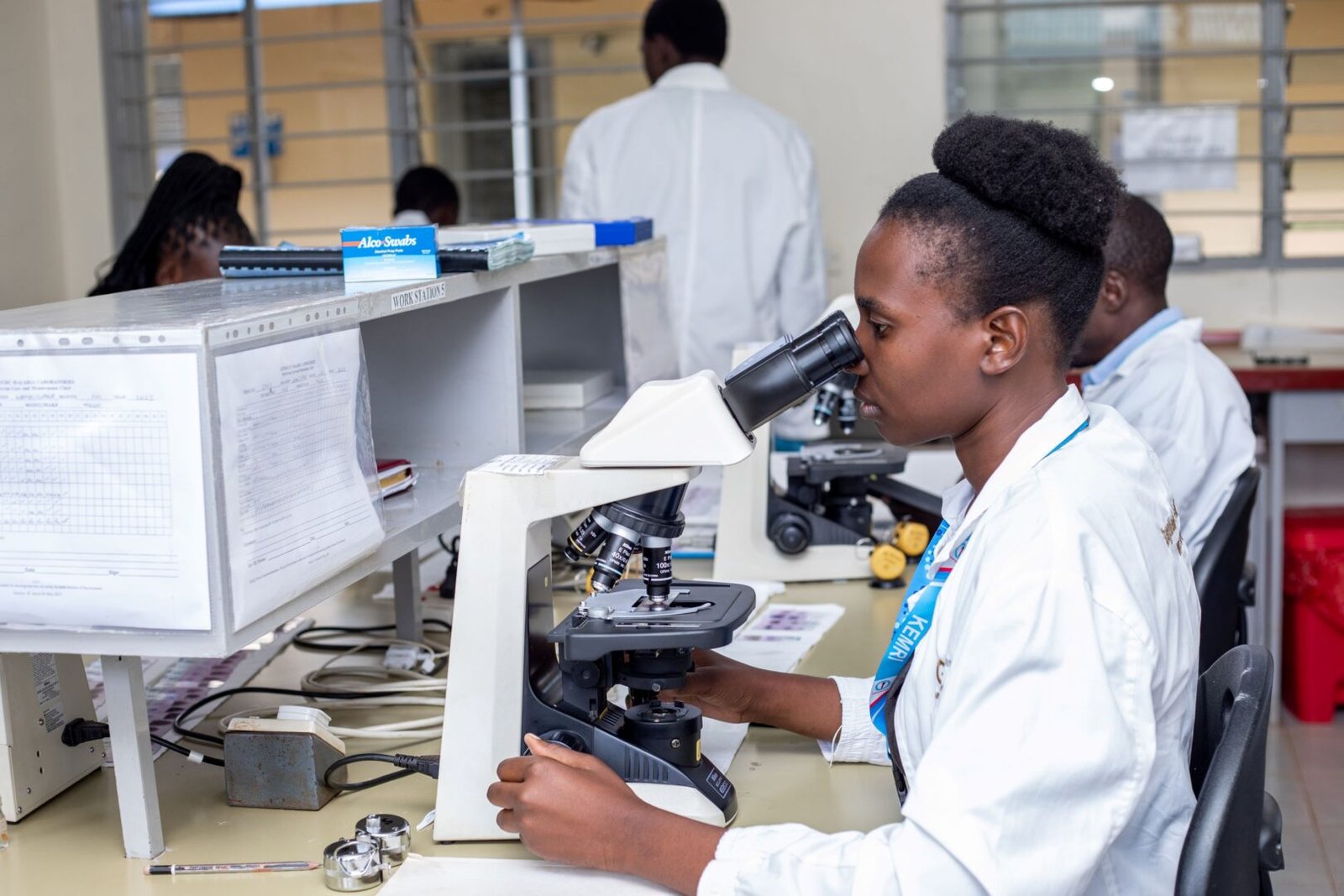
A dedicated lab technician peers intently through a compound microscope, carefully scanning blood smear slides for malaria parasites — a critical step in accurate diagnosis and timely patient care. Photograph: KEMRI
Guided by the Kenya Malaria Strategy 2023–2027, national efforts are focused on scaling prevention, strengthening community-based care, and accelerating the adoption of research, innovation, and new technologies, including vaccines and improved diagnostics. At the Kenya Medical Research Institute (KEMRI), we are proud to contribute to this national effort by generating locally-relevant evidence, advancing innovation, and supporting Kenya’s journey toward a malaria-free future.
KEMRI’s Kenya-led engine for malaria-relevant science and evidence
Established in 1979, KEMRI has become a cornerstone of Kenya’s health research system, driving impactful malaria research through a nationwide network of 15 centres and numerous field sites. Over the past three decades, our work has helped shape not only national policy but also global understanding of how malaria evolves, spreads, and could ultimately be defeated.
KEMRI’s Centre for Global Health Research (CGHR) Malaria Programme has in fact driven an extraordinary sequence of the World Health Organization’s (WHO) policy changes over three decades. In the 1990s, CGHR researchers demonstrated that children with severe malaria discharged on chloroquine were more likely to die than those treated with Sulfadoxine-Pyrimethamine (SP), directly informing the shift in WHO’s discharge treatment policy. Subsequent work established the safety risk of high-dose folic acid in pregnancy for women receiving Intermittent Preventive Treatment with SP (IPTp-SP), leading Kenya to adopt the lower-dose formulation now standard practice. In 2021, CGHR evidence contributed to two landmark WHO recommendations: Post-Discharge Malaria Chemoprevention (PDMC) for high-risk children, and the RTS,S malaria vaccine for widespread use in sub-Saharan Africa. A year later, CGHR-supported trials helped establish the safety of Artemether-Lumefantrine (AL) during the first trimester of pregnancy — overturning longstanding caution and expanding treatment options for pregnant women at the most vulnerable stage of gestation.
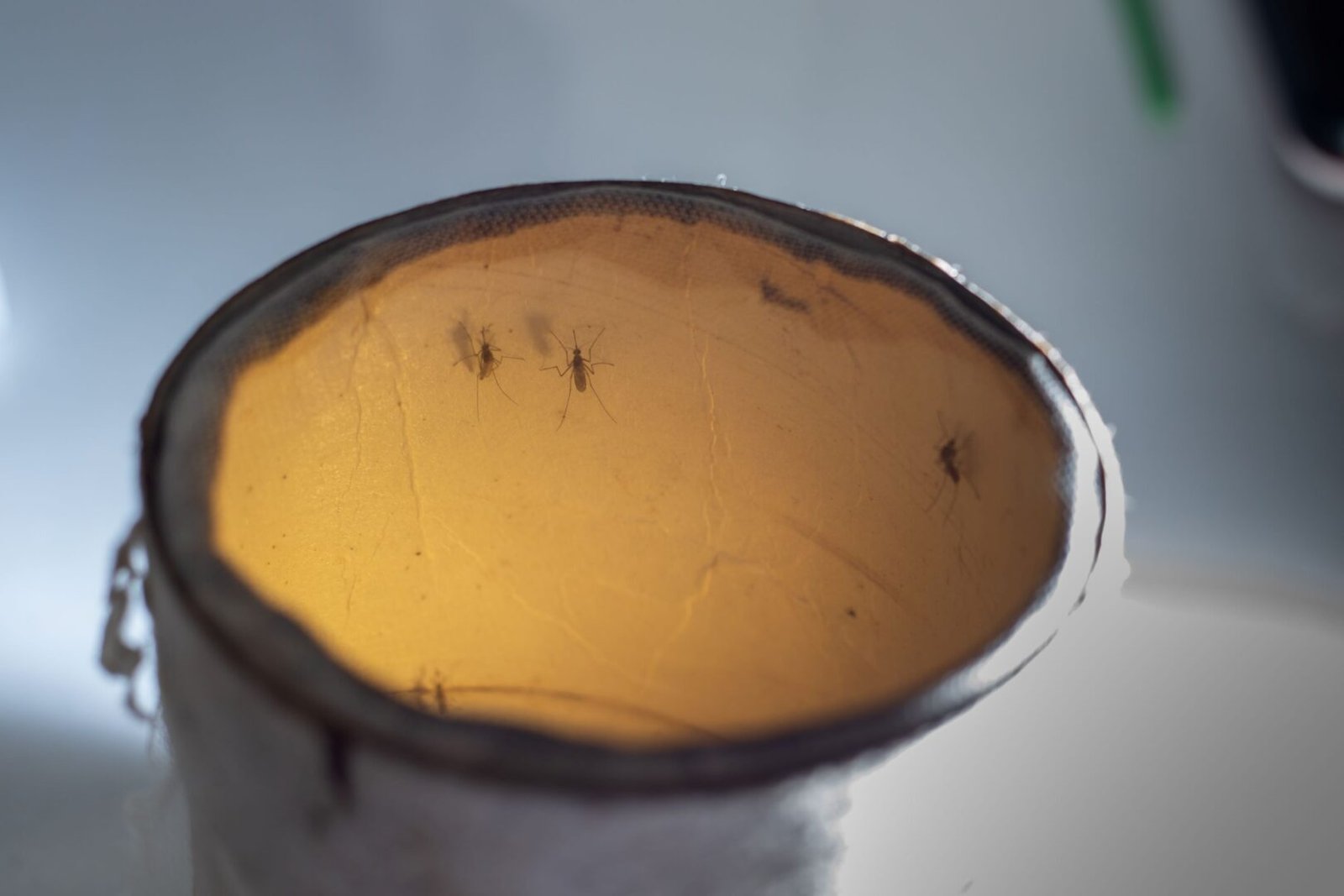
Photograph: A collection cup showing an Anopheles mosquito–responsible for malaria transmission-alongside Culex mosquitoes. Source: UNITAID and KEMRI
Perhaps the most striking illustration of KEMRI’s translational power is the Busia County cluster-randomized trial, run as part of the AEGIS consortium with Unitaid funding, which evaluated spatial repellents in an area of high malaria transmission, widespread pyrethroid resistance, and near-universal insecticide-treated net coverage. Published in The Lancet in 2025, the results showed a significant reduction in malaria infection in children and were ratified by the WHO Vector Control Advisory Group. On 13 August 2025, WHO issued a conditional recommendation for spatial emanators alongside insecticide-treated nets — the first new vector control class endorsed by WHO in over 40 years.
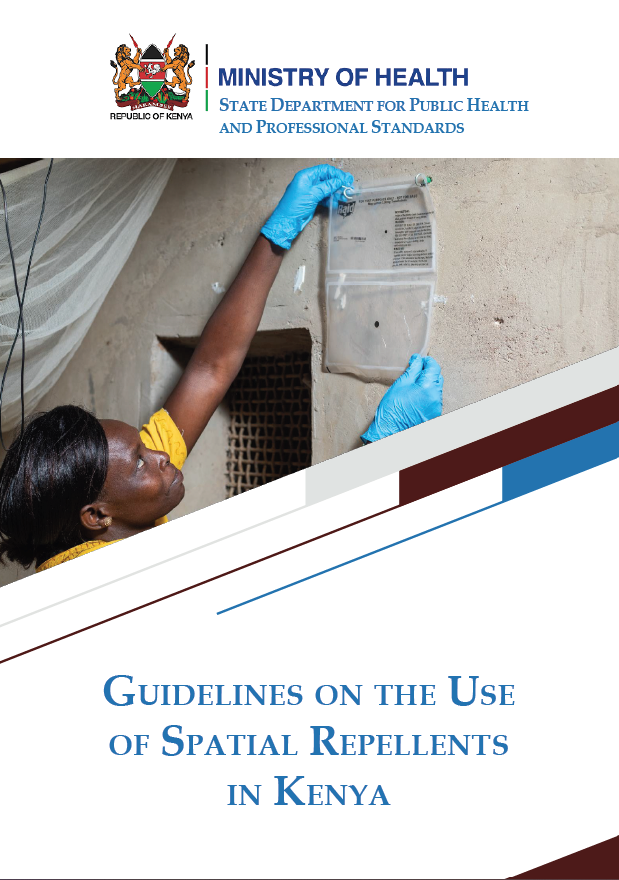
Building directly on this evidence, Kenya’s Ministry of Health, with KEMRI and the National Malaria Control Programme co-leading, published the Guidelines on the Use of Spatial Repellents in Kenya in January 2026: a nationally owned, evidence-based framework for scaling up this new intervention across high-burden and epidemic-prone counties.
The cover of the Spatial Repellent guidelines tells its own story — a community health worker installing a spatial repellent on the wall of a home in Kenya — an image that capture exactly what KEMRI’s science is for: evidence generated in Kenya, shaping policy in Kenya, protecting Kenyan families.
Our Centre for Global Health Research is driving most of this work, with our scientists leading cutting-edge research on malaria diagnosis, drug resistance, transmission dynamics, and innovation efforts that directly inform national control strategies and contribute to global elimination goals. Complementing this, our Biotechnology Programme is advancing the development and application of tools such as vaccines, diagnostics, genetic engineering, and bioinformatics to strengthen malaria prevention and response.
KEMRI is also leading national-level surveillance of Anopheles stephensi — an invasive mosquito species historically confined to South Asia and the Arabian Peninsula that has now been detected across the Horn of Africa and is advancing further into the continent. Unlike Kenya’s native malaria vectors, which are largely rural, An. stephensi is highly adapted to urban environments, thriving in water storage containers and artificial breeding sites characteristic of rapidly growing African cities. Its establishment would represent a serious new threat: the urbanization of malaria. KEMRI’s entomologists alongside the National Malaria Control Program (NMCP) are conducting national surveillance, pivoting on the Community Health Promoter (CHP) network to map its spread and provide the early-warning intelligence Kenya needs to respond before the threat becomes entrenched.
Beyond spatial repellents and vector surveillance, CGHR entomology team is evaluating several additional tools in its pipeline. These include the HOMES housing trial, evaluating how modified housing designs reduce mosquito entry and malaria exposure, and VectorGrid-Kenya, assessing fine-scale spatial targeting of vector control. Together, these projects position CGHR at the forefront of the next generation of malaria vector control innovation.
We are also investing in the next generation of Kenyan scientists. In 1992, the KEMRI Graduate School of Health Research/Sciences was established, creating a research-oriented training environment for young scientists looking to address pressing health issues. Its academic programmes include multiple Masters and PhD pathways spanning fields directly relevant to malaria control, including epidemiology, biostatistics, parasitology and entomology, and molecular medicine. The Kenyan Parliament has recently approved the award of the KEMRI charter following the recommendation of the Commission for Higher Education (CUE) and this will strengthen KEMRI’s capacity building efforts for highly specialized Biomedical and Research training Programs.
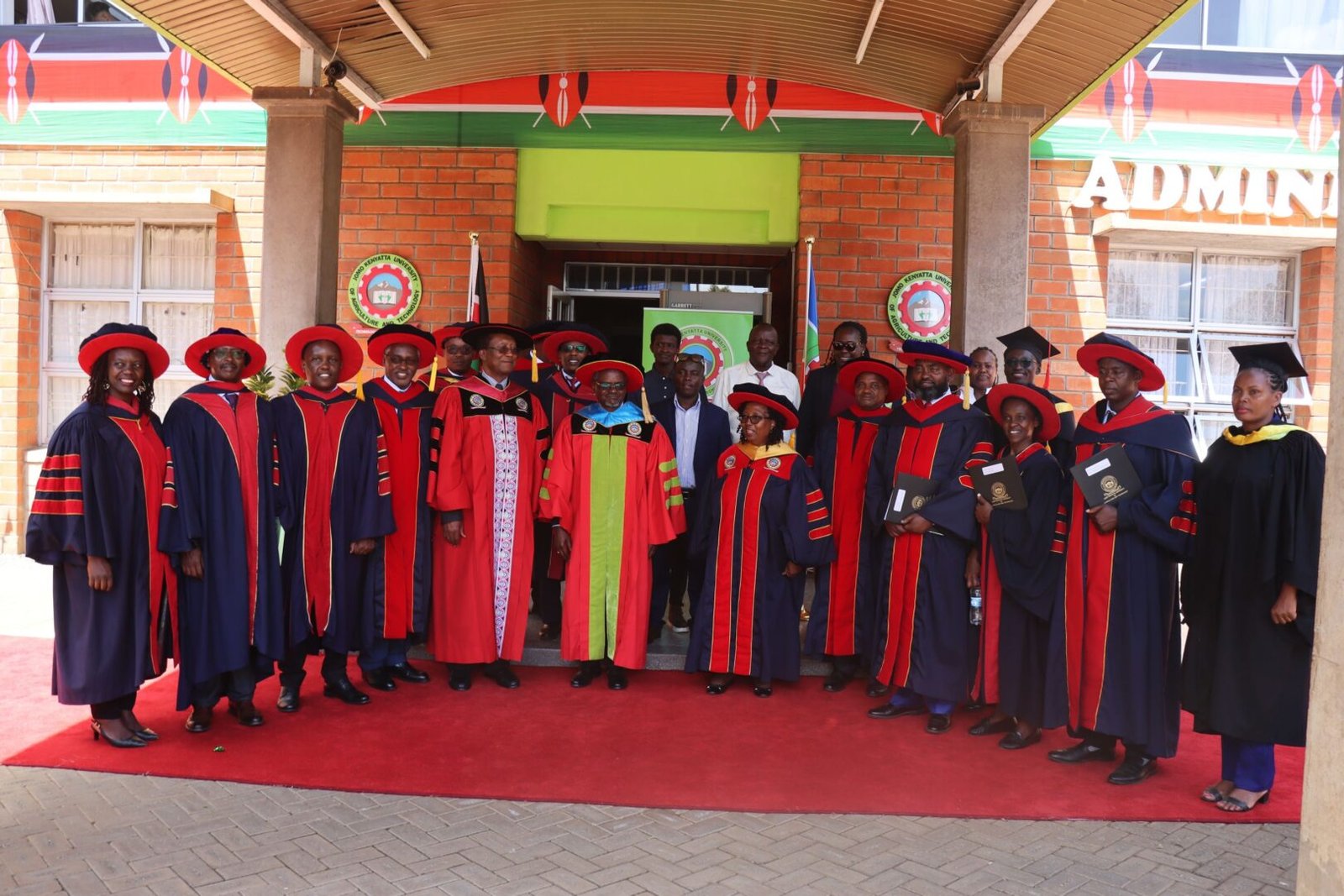
45th JKUAT–KEMRI Joint Graduation Ceremony held on 5th December 2025. Photograph: KEMRI
Driving progress against malaria from Kilifi
Since the late 1980s, researchers have tracked malaria cases at Kilifi County Hospital and surrounding communities. This has provided one of the most detailed records of severe malaria in the African region, revealing how the disease changes as transmission declines and interventions improve. These findings have influenced international definitions of severe malaria and guided treatment and prevention policies in Kenya and globally.
KEMRI scientists have helped explain, through long‑term cohort studies, how repeated exposure to malaria, especially in early childhood shapes immune responses later in life. They also demonstrated that malaria can alter how the immune system responds to other infections and vaccines, reshaping global understanding of childhood immunity in high‑burden settings.
KEMRI is also recognized as Africa’s leading centre for controlled human malaria infection (CHMI) studies. These carefully regulated studies involve exposing consenting adult volunteers to malaria parasites under medical supervision. They allow researchers to quickly test vaccine candidates, study immune responses, and understand transmission dynamics.
Importantly, this scientific work has been matched by strong social science and ethics research, ensuring community engagement, trust, and responsible conduct. From the world’s first malaria vaccine, RTS, S, to the R21/Matrix‑M, KEMRI has been central to major vaccine trials. Studies conducted in Kilifi have helped determine how effective these vaccines are, how long protection lasts, and how they perform in real‑world African settings. This work contributed directly to the WHO decision that led to malaria vaccines being recommended for use in children.
Researchers have also shown that Ivermectin – a well-known dewormer – significantly reduces malaria transmission, offering new hope in the fight against the disease. The BOHEMIA trial, the largest study on Ivermectin for malaria to date, showed a 26% reduction in new malaria infection on top of existing bed nets, providing strong evidence of ivermectin’s potential as a complementary tool in malaria control. The study took place in coastal Kenya where malaria is common, where scientists, doctors, and communities worked together.
Advancing Kenyan-led malaria science through international collaboration
While leadership is firmly Kenyan, our malaria research is strengthened through long-standing global partnerships that support innovation, training, and scientific exchange.
Our Malaria research Groups at CGHR collaborate with a diverse network of leading international research institutions, including the US Centers for Disease Control and Prevention (CDC), Liverpool School of Tropical Medicine (LSTM), Imperial College London, London School of Hygiene & Tropical Medicine, The University of Notre Dame, MRC Centre for Outbreak Analysis & Modelling, Radboud University Nijmegen Medical Centre, Royal Tropical Institute (KIT), University of Pennsylvania, International Atomic Energy Agency (IAEA) and the Kilimanjaro Clinical Research Institute.
Our scientists also contribute to global malaria efforts through initiatives led by the World Health Organization, including work on diagnostic tools and drug resistance networks supported by the WHO Special Programme for Research and Training in Tropical Diseases (WHO/TDR) and the Bill & Melinda Gates Foundation. A particularly significant collaboration is the CGHR’s long-standing partnership with the Walter Reed Army Institute of Research (WRAIR), hosted on-site as the United States Army Medical Research Unit – Kenya (USAMRU-K). This collaboration conducts critical surveillance for multidrug-resistant (MDR) malaria, monitoring the efficacy of frontline antimalarial medicines and tracking the emergence of resistance across Kenya. It also carries out surveillance for deletions in the Plasmodium falciparum Histidine-Rich Protein 2 (HRP2) and Histidine-Rich Protein 3 (HRP3) genes – mutations that cause false-negative results with the Rapid Diagnostic Tests (RDTs) used across Kenya and sub-Saharan Africa, with direct implications for case detection and treatment. This surveillance provides the Ministry of Health and global partners with the intelligence needed to safeguard the integrity of Kenya’s malaria diagnostic and treatment infrastructure.
These global partnerships and collaborations ensure that evidence generated in Kenya contributes directly to regional and global malaria policy. They are designed to build local scientific leadership, transfer technology, and strengthen Kenya’s research infrastructure — ensuring that global collaboration leaves lasting national capacity.
Linking research, government, industry, and communities to deliver impact
Ending malaria will take more than scientific discovery and innovation. It demands coordinated action across sectors: government, academia, industry, and communities alike. At KEMRI, we’ve made this collaborative approach a cornerstone of our mandate.
As the research arm of Kenya’s Ministry of Health, KEMRI provides leadership in shaping health research agendas, advising on evidence-based policy options, and supporting disease surveillance and outbreak preparedness. We work closely with National and County Governments across all 47 counties, aligning malaria research with local priorities and implementation realities.
We also collaborate across the innovation and private-sector ecosystem. Recent work by our scientists has demonstrated low-cost housing innovations that reduce indoor heat while preventing mosquito entry, highlighting how cross-sector research, linking health, engineering, and community needs, can contribute to malaria prevention beyond traditional interventions like bed nets.
Within academia, the Malaria Division partners with Kenyan institutions including the University of Nairobi, Jomo Kenyatta University of Agriculture and Technology, Kenyatta University and many others, strengthening national research networks and mentoring future scientists.
Community engagement is at the core of how we conduct malaria research. We take this responsibility seriously, guided by clear standard operating procedures that ensure engagement is ethical, and embedded throughout the research process. By integrating approaches such as community outreach, stakeholder consultations, and policy dialogue, we ensure that our research is responsive to local realities and that new malaria tools and strategies are understood, accepted, and effectively used.
As we mark World Malaria Day, KEMRI remains committed to providing leadership in the fight against malaria – working collaboratively with national, regional, and global partners to advance innovation and translate research into impact. Through sustained partnerships and shared effort, we will continue to support Kenya’s, Africa’s and global progress toward a malaria-free future.