
15Sep 26
Mosquito-borne diseases such as malaria continue to cause significant illness and death, particularly in sub-Saharan Africa. Yet in many environments, fundamental aspects of mosquito behavior and population dynamics remain poorly studied. In our new study, we examined the behavior of Anopheles coluzzii mosquitoes – the primary malaria vector on the islands of São Tomé and Príncipe, where the University of California Malaria Initiative (UCMI) has been working since 2018.
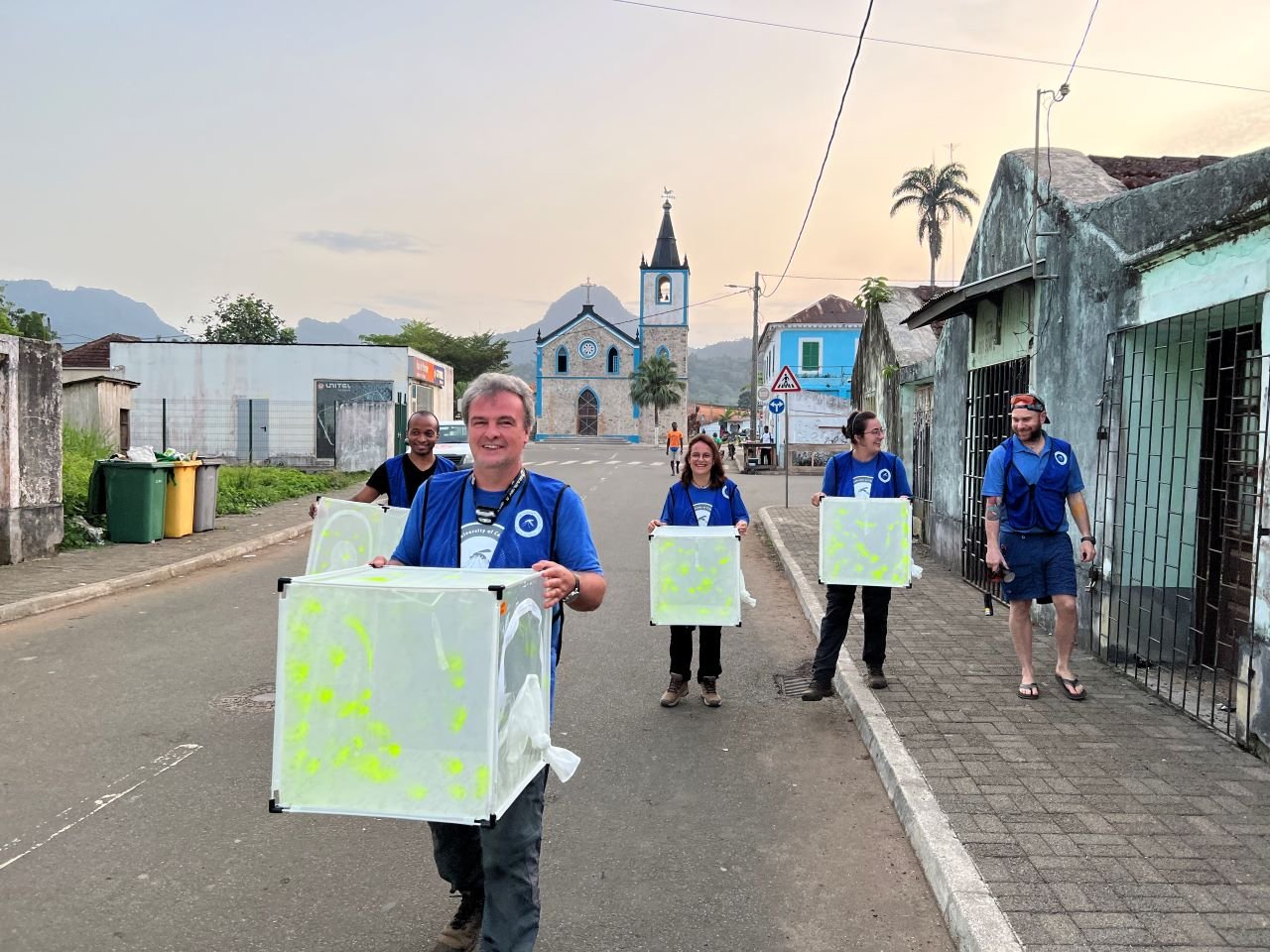
Mark-release-recapture experiment on Príncipe Island, April 2022. Left to right, Aires Januário Fernandes da Moura, João Pinto, Carla A. Sousa, Maria Júlia M. Corrêa and Robert E. Ditter. Photograph: UCMI
To enhance our understanding of An. coluzzii in island ecosystems, we used a mark–release–recapture (MRR) approach. During MRR experiments, mosquitoes are marked with a fluorescent powder, released, and later recaptured, to estimate population size, dispersal patterns, and seasonal changes in behavior. The results showed that mosquito populations were generally larger during the wet season, particularly on São Tomé. Patterns of dispersal varied by island and season, with mosquitoes traveling farther during the wet season on São Tomé and during the dry season on Príncipe. In São Tomé, mosquito movement was also influenced by prevailing wind direction.
This study represents the culmination of several years of work beginning in 2021, bringing together field, laboratory, and analytical efforts to advance our understanding of An.coluzzii mosquito populations. It provides valuable insights into how environmental factors shape the population size and dispersal of An. coluzzii across varying seasonal and environmental conditions in STP. These findings help support the responsible development of vector control approaches grounded in a clear understanding of the environments in which they may one day be used.
