28Sep 26
Insects are our planet’s most diverse and abundant animal group on earth – yet despite their importance, most species remain poorly understood and understudied. Insect monitoring – the collection and analysis of data on insect presence, abundance, diversity, and distribution – is critical to track how populations change over time and across environments. It can reveal shifts in biodiversity, measure the impact of conservation efforts, and detect the spread of invasive species.
Our capacity to monitor insects remains surprisingly limited, in part because of their diversity and the difficulty of distinguishing species using our eyes alone. This is a major challenge because some insect groups are directly linked to human health, most notably mosquitoes that are major vectors of human disease, including malaria and dengue.
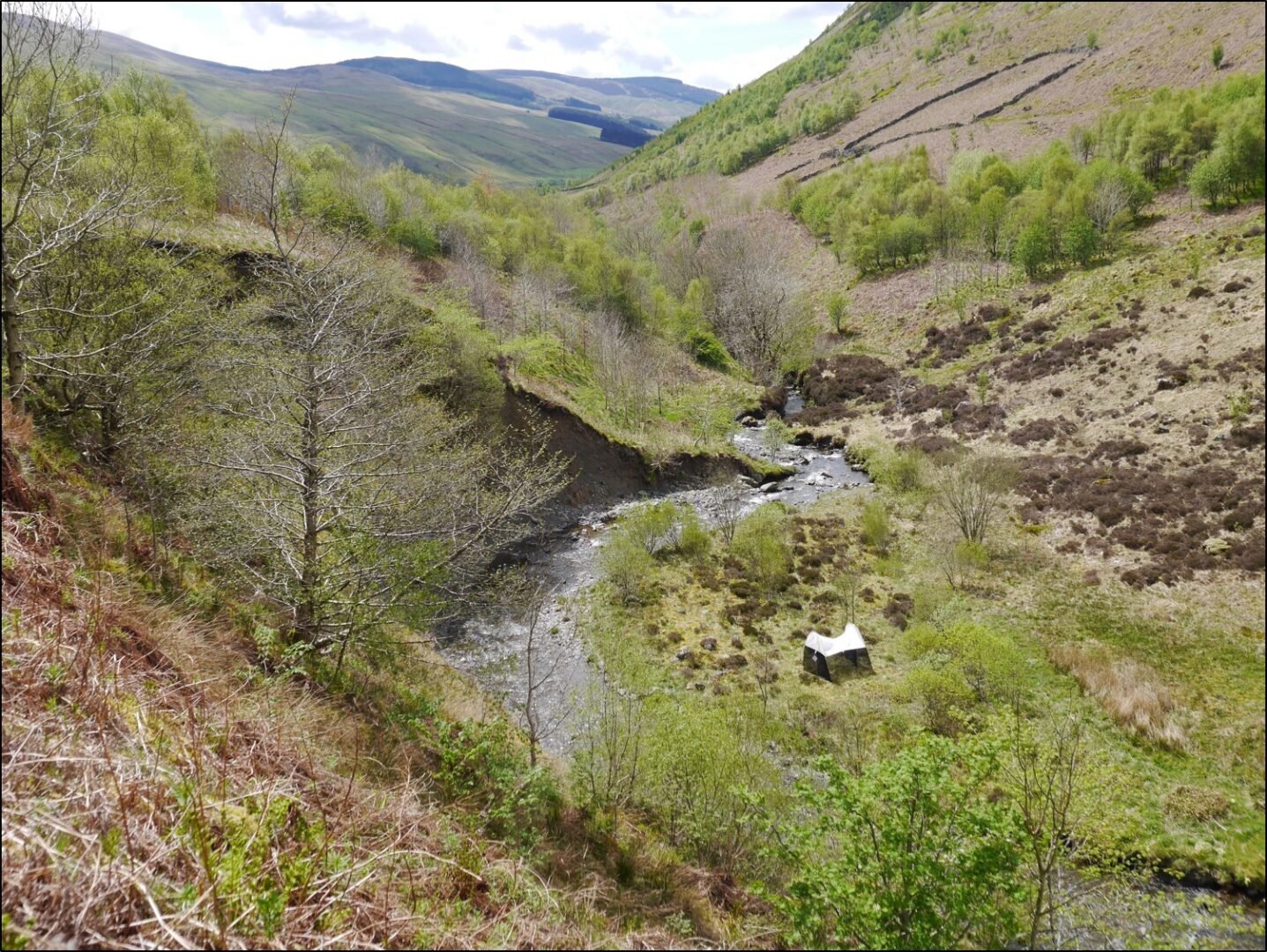
Borders Forest Trust BIOSCAN Malaise trap at Carrifran. Photograph: Wellcome Sanger Institute
DNA barcoding offers one of the most promising paths forward. By linking species to a genetic signature, we can build reference databases that make monitoring more accurate, scalable and insightful. My team at the Wellcome Sanger Institute has been working as part of two global initiatives designed to monitor insect populations at unprecedented scale. The BIOSCAN – UK project is a system for monitoring arthropod species diversity across space and time. Through this project, we will DNA barcode over one million flying insects over five to ten years. Insects from 100 sites are collected monthly using traps operated by BIOSCAN-UK project partners, then analyzed in the Sanger laboratories using DNA barcoding. To do this, we non-destructively leach the DNA out of the specimens so that their bodies remain intact and available for further study by taxonomists. Therefore this project results in both specimen and DNA biobanks that are forever linked to the DNA barcode generated for each specimen. By creating these foundational DNA biobanks, we hope to contribute to research into climate change impacts, conservation interventions, and broader biodiversity trends. Thus far in the project, project partners have already sent us over 400,000 specimens they have collected and we have detected over 10,000 species.
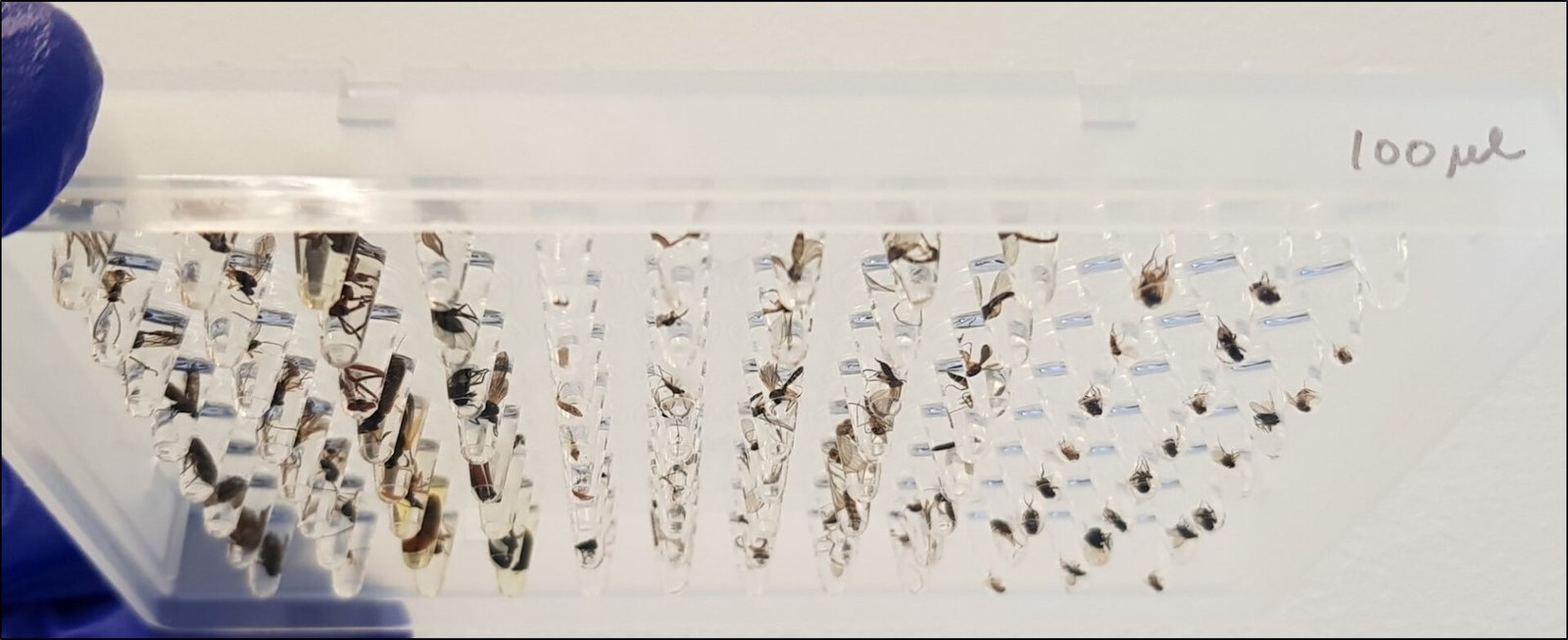
Plate of Forest Research BIOSCAN specimens, ready for DNA extraction. Photograph: Wellcome Sanger Institute
Another project that uses something akin to DNA barcoding is our ANOSPP project, which focuses specifically on Anopheles mosquitoes that are responsible for human malaria transmission. Our primary aim is to improve our understanding of species diversity, population structure, and malaria transmission across Africa. Again, using a partnership model, our colleagues and collaborators from malaria endemic areas collect Anophelines that they are interested in, and we analyze them using a standardized amplicon sequencing panel that we call ANOSPP (for ANOpheles SPecies and Plasmodium panel). These data are helping us better understand species prevalence and distribution, population structure, as well as map the presence of malaria parasites. This data is essential for vector control efforts, including research on the use of gene drive for malaria control. Importantly, a key feature of this project is that we use the same non-destructive DNA extraction workflow described above that supports the preservation of specimens for morphological study after sequencing, and specimens can be returned to partners for further study.
Reliable systems to identify species, track populations, and measure ecological change, can play a key part in evaluating the impacts of new technologies for mosquito control, such as gene drive technologies. Building upon BIOSCAN and ANOSPP, we are working to develop a new, scalable and affordable gene drive monitoring panel. This new tool could be used at scale to track the spread of a potential future gene drive release for malaria control. The panel would help determine which mosquito species carry gene drive, assess changes in mosquito feeding behavior, and monitor malaria-parasite infection rates. We look forward to a future in which informative and scalable monitoring tools, such as amplicon sequencing, are used globally and routinely to keep infectious diseases at bay and to improve ecosystem and planetary health.