28Sep 26
Last month, the University of Keele inaugurated a new state-of-the-art insectary, marking a major step forward in efforts to understand and control insect species responsible for widespread challenges in global health, agriculture and wildlife conservation.
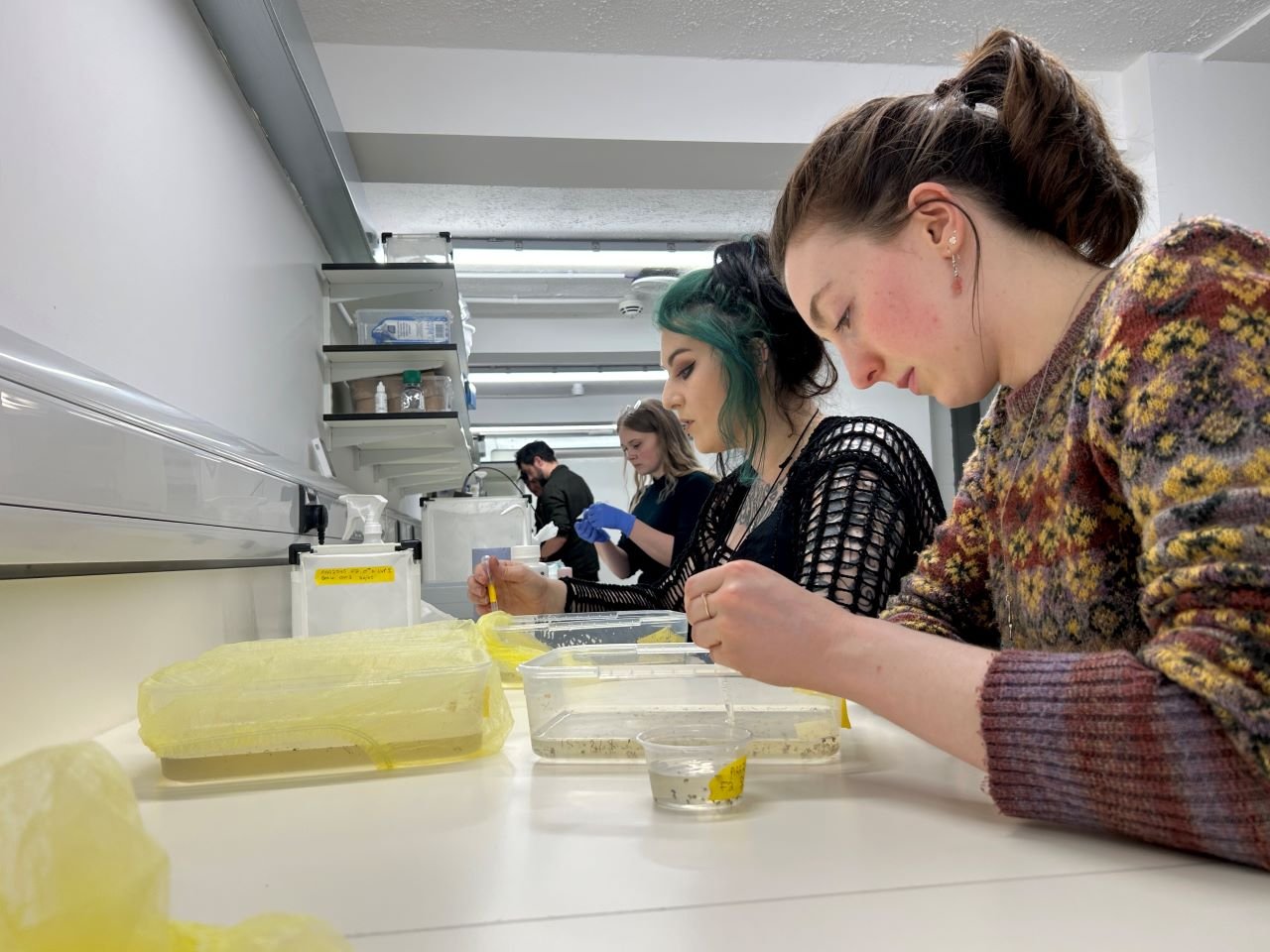
Scientists and researchers at Keele’s new insectary. Photograph: University of Keele
The new facility reinforces Keele’s long-standing position as a center for research excellence in entomology and infectious diseases in the UK. The facility features seven custom-built climate-control chambers capable of housing a wide range of insect pests, including major tropical disease vectors such as Aedes aegypti, Culex quinquefasciatus, and Anopheles gambiae, the primary mosquito species responsible for transmitting malaria across sub-Saharan Africa.
Malaria, which remains one of the leading causes of death among children under five in sub-Saharan Africa, will be a major focus of the research undertaken in the insectary. Part of our work includes investigating ways to genetically modify mosquitoes in order to reduce their ability to transmit disease, or to reduce their numbers.
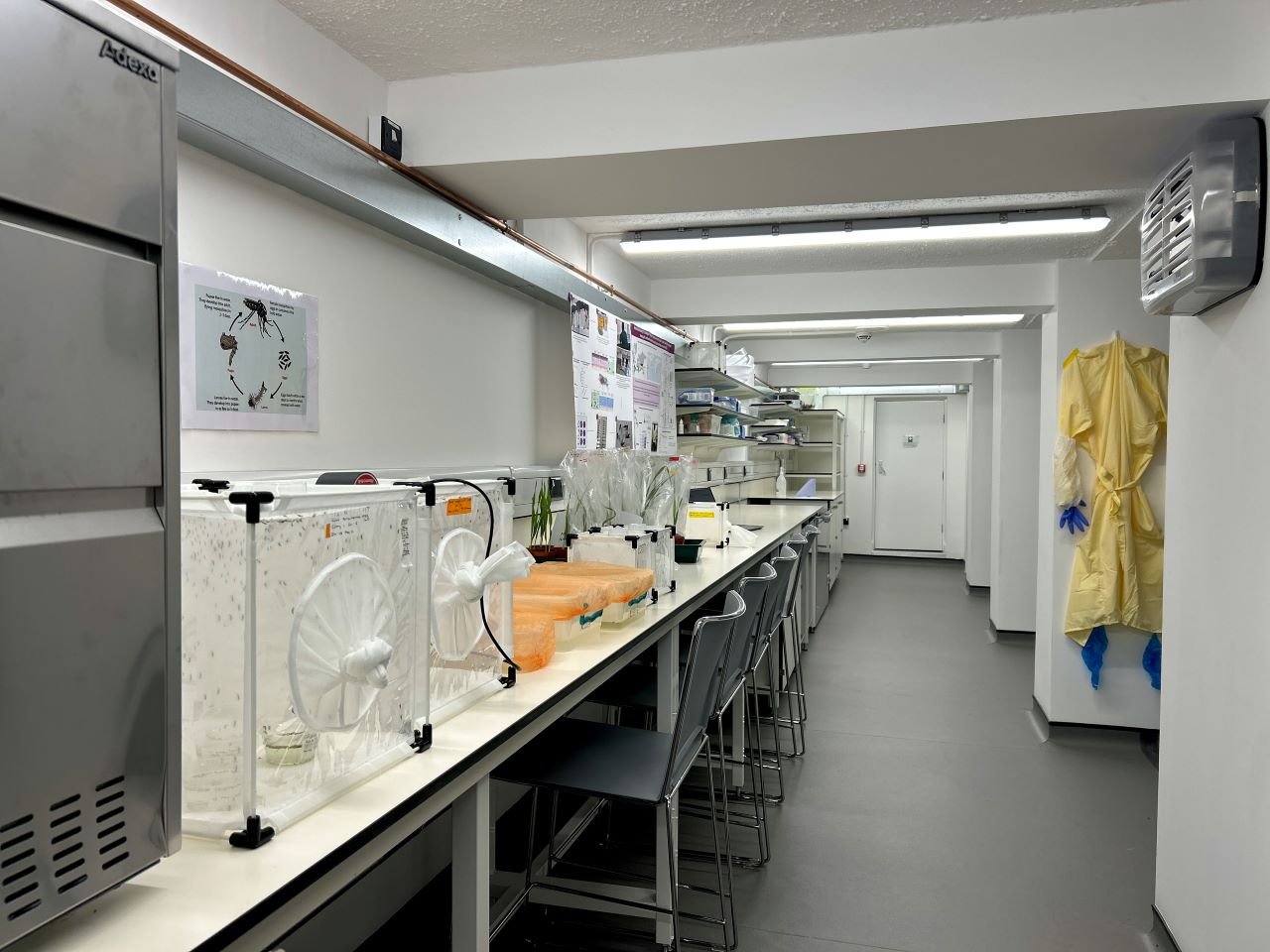
Small mosquito cages at Keele’s new insectary. Photograph: University of Keele
Beyond global health, the facility will support research on agricultural pests that have a devastating impact on food production and farming productivity. Species such as locusts, aphids, and fruit flies can now be studied under highly controlled conditions, enabling researchers to develop more effective and sustainable pest management strategies.
One of the insectary’s greatest strengths is its flexibility. Each chamber can be independently programmed to replicate environmental conditions from anywhere insects can exist in the world, allowing our scientists to simulate a wide range of climates and ecosystems with precision.
We are extremely grateful for support from the Wolfson Foundation in developing this facility, an independent grant-making charity with a focus on education and research. Its aim is to contribute to civil society by supporting high-quality projects in science, health, heritage, humanities and the arts.
Named after Edith Patch, a pioneering American entomologist known as a world-renowned expert on aphids, the insectary will also play a key role in training the next generation of scientists. PhD and Master’s students will gain hands-on experience working in a state-of-the-art environment alongside experts in entomology and disease biology.