
04Nov 26
Convened under the theme “Taking Action for Nature,” the UN Biodiversity Conference 2026 (including COP 17, CP-MOP 12, and NP-MOP 6) took place from October 19–30 in Yerevan, Armenia. The Conference marked the first review of collective progress towards implementation of the Kunming-Montreal Global Biodiversity Framework (KMGBF) at a critical time for biodiversity conservation, when over one million species are threatened with extinction. A key outcome of the conference was the Yerevan Pathway, which identifies what should be done to accelerate biodiversity action and close the implementation gaps identified in the State of Biodiversity Action report, which underpinned the global review at COP17.
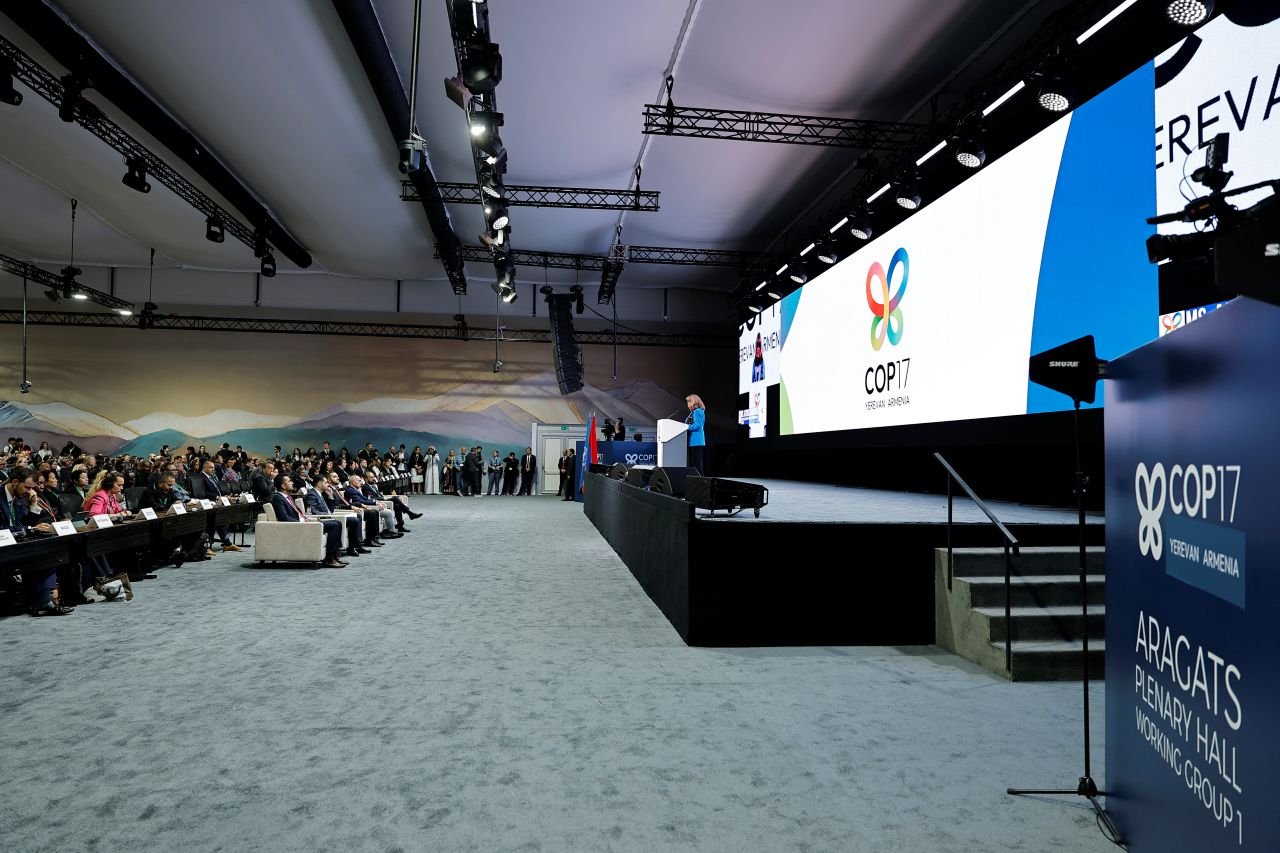
Convention on Biological Diversity (CBD)’s Executive Secretary Astrid Schomaker’s opening statements at the UN Biodiversity Conference 2026. Photograph: Secretariat of the Convention on Biological Diversity‘s Flickr album.
During the conference, Parties adopted a full range of decisions that advance the work of the Convention on Biological Diversity across scientific, technical and implementation-related issues. One example was the adoption of a capacity-building action plan on synthetic biology, aimed at reducing the gap between developing and developed countries in this field. The plan seeks to build the skills, knowledge, regulatory capacity, physical infrastructure, and access needed to consider and use innovative tools for conservation, while fostering scientific cooperation and local research and development. While voluntary, the plan offers a useful blueprint for moving the field forward. It also reflects a welcome shift: following several years of discussions largely focused on the potential risks of synthetic biology applications, COP 17 created space for a more balanced conversation on how these technologies could also support biodiversity conservation.
CHM Knowledge Fair Posters Synthesis. Video: Secretariat of the Convention on Biological Diversity‘s YouTube channel.
At the Clearing House Mechanism Knowledge Virtual/Poster Fair at COP17’s Blue Zone, the Outreach Network presented a poster on collaborative, culturally appropriate dialogue between gene drive researchers and Indigenous Peoples and Local Communities. This work, coordinated by the Outreach Network for Gene Drive Research and representatives of the International Indigenous Forum on Biodiversity (IIFB) and described in this paper, shows how meaningful engagement with rightsholders and communities can strengthen the relevance, appropriateness and ethical integrity of scientific processes.
Two relevant side events also took place in Yerevan. On 19 October, the Foundation for the National Institutes of Health (FNIH)’s GeneConvene Global Collaborative hosted From Guidance to Practice: Building Capacity for Risk Assessment of Living Modified Organisms. The session brought together regulators, scientists and capacity-building practitioners from Asia and the African region to discuss how international guidance documents can become functioning national risk assessment systems. Speakers Dr. Flerida A. Carino, University of the Philippines Diliman, Dr. Vibha Ahuja, BioSETU Consulting and Dr. Daniel Osei Ofosu, Ghana Atomic Energy Commission (GAEC), drew on experiences from the Philippines, India and across Africa to show how countries have moved from biosafety laws and international guidance to functioning risk assessment systems. They noted that progress requires long-term investment in people, institutions, and partnerships. Dr. Justin Overcash, Foundation for the National Institutes of Health (FNIH), introduced the GeneConvene Academy, an online platform launching in 2027 that will offer bite-sized, tailored courses to help regulators turn guidance such as the CBD’s Additional voluntary guidance materials to support case-by-case risk assessments of living modified organisms containing engineered gene drives, into lasting practical skills.
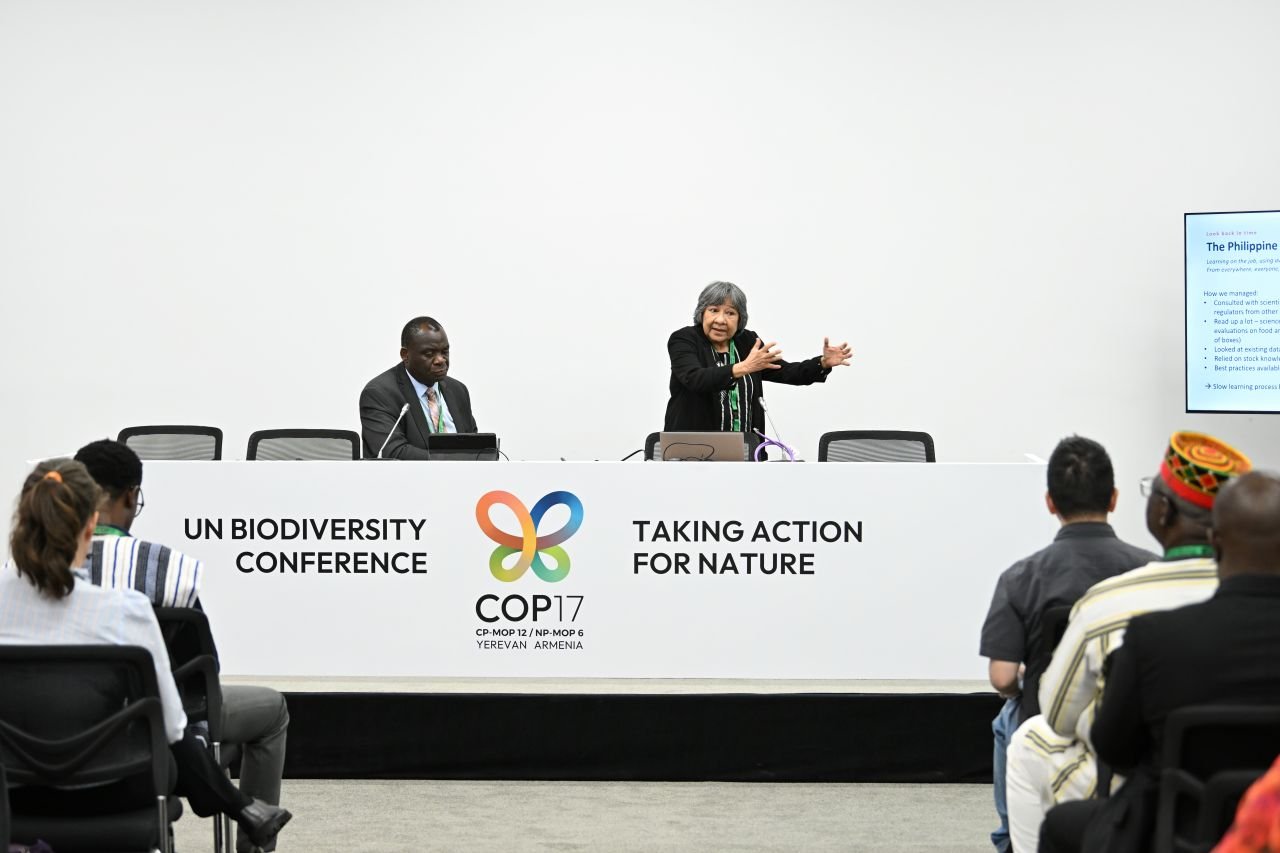
Dr. Flerida A. Carino, University of the Philippines Diliman, presenting at the side event “From Guidance to Practice: Building Capacity for Risk Assessment of Living Modified Organisms” in Yerevan, Armenia. Photograph: Secretariat of the Convention on Biological Diversity‘s Flickr album.
A second side event explored how IUCN’s Policy on Synthetic Biology for nature conservation could support implementation of the Kunming-Montreal Global Biodiversity Framework (KMGBF). It was co-hosted by IUCN, the International Centre for Genetic Engineering and Biotechnology (ICGEB), and the governments of Canada, Nigeria, the Republic of Korea and Seychelles. Discussions framed the Policy as a flexible framework that countries can adapt to their national contexts to weigh both the potential benefits and risks of synthetic biology on a case-by-case basis. Building national capacity came up repeatedly as essential for countries to assess synthetic biology applications effectively. Speakers also pointed to the urgency of the biodiversity crisis and to synthetic biology’s potential to complement existing conservation efforts in support of the KMGBF targets.
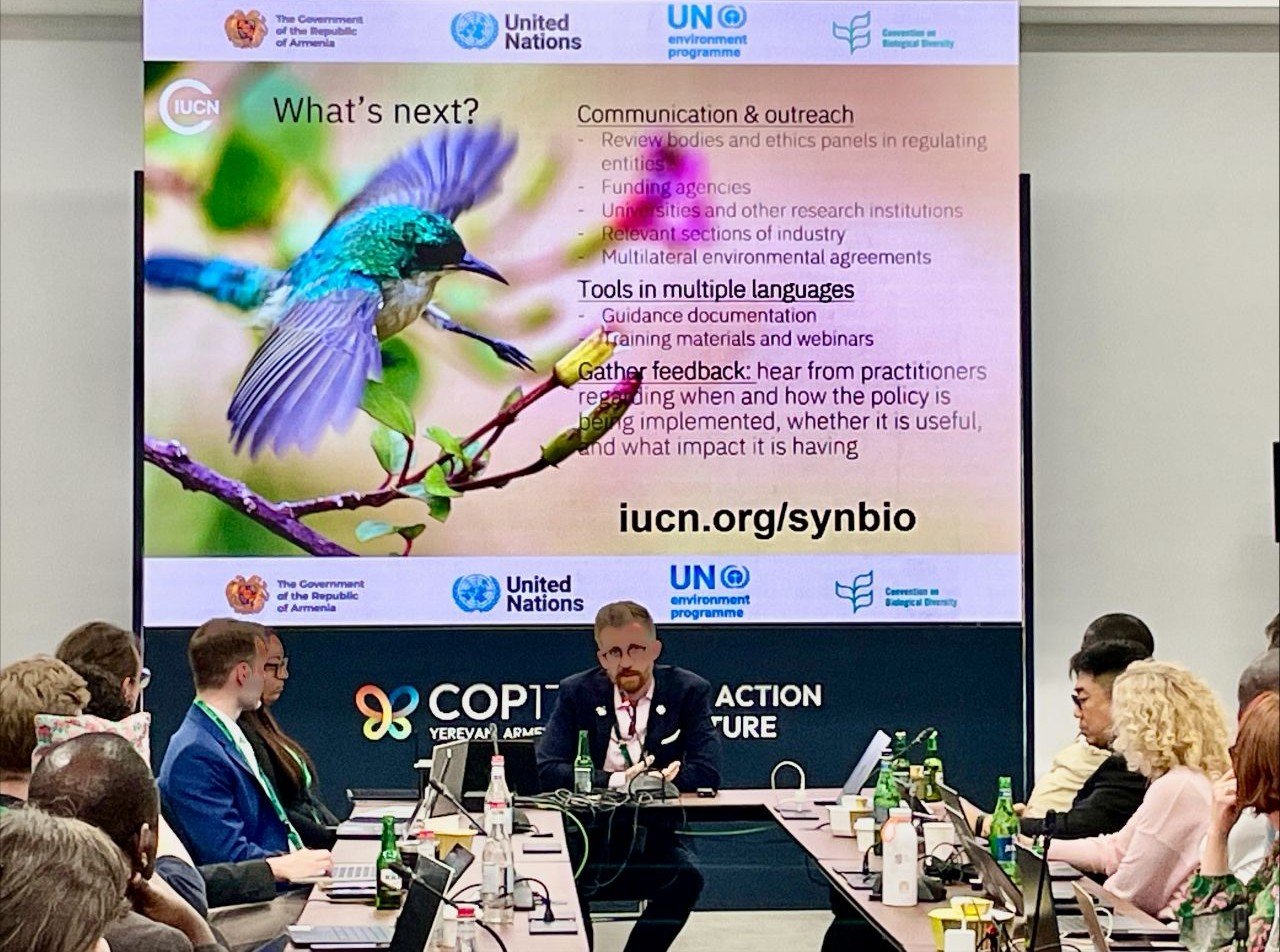
Participants of the side event: How are CBD Parties using the new IUCN Policy on Synthetic Biology in relation to Nature Conservation? in Yerevan, Armenia.
The meetings in Yerevan underscored the need for stronger cooperation and accelerated action to achieve the Framework’s 2030 targets.
