15Sep 26
A Conversation with Maximillian Seunik, Screwworm Free Future
Editor’s note: This article contains graphic wildlife imagery that some readers may find disturbing.
The recent resurgence of New World screwworm (NWS) in Central America and Mexico has underscored the continuing threat posed by this devastating parasite and renewed interest in innovative approaches to control it. We spoke with Maximillian Seunik, a public health scientist by training and the Executive Director of Screwworm Free Future. In this piece, he discusses why new approaches are needed to address this growing threat, the potential of genetic biocontrol technologies, and the need for collaborative efforts to build a pathway to achieving a screwworm-free future.
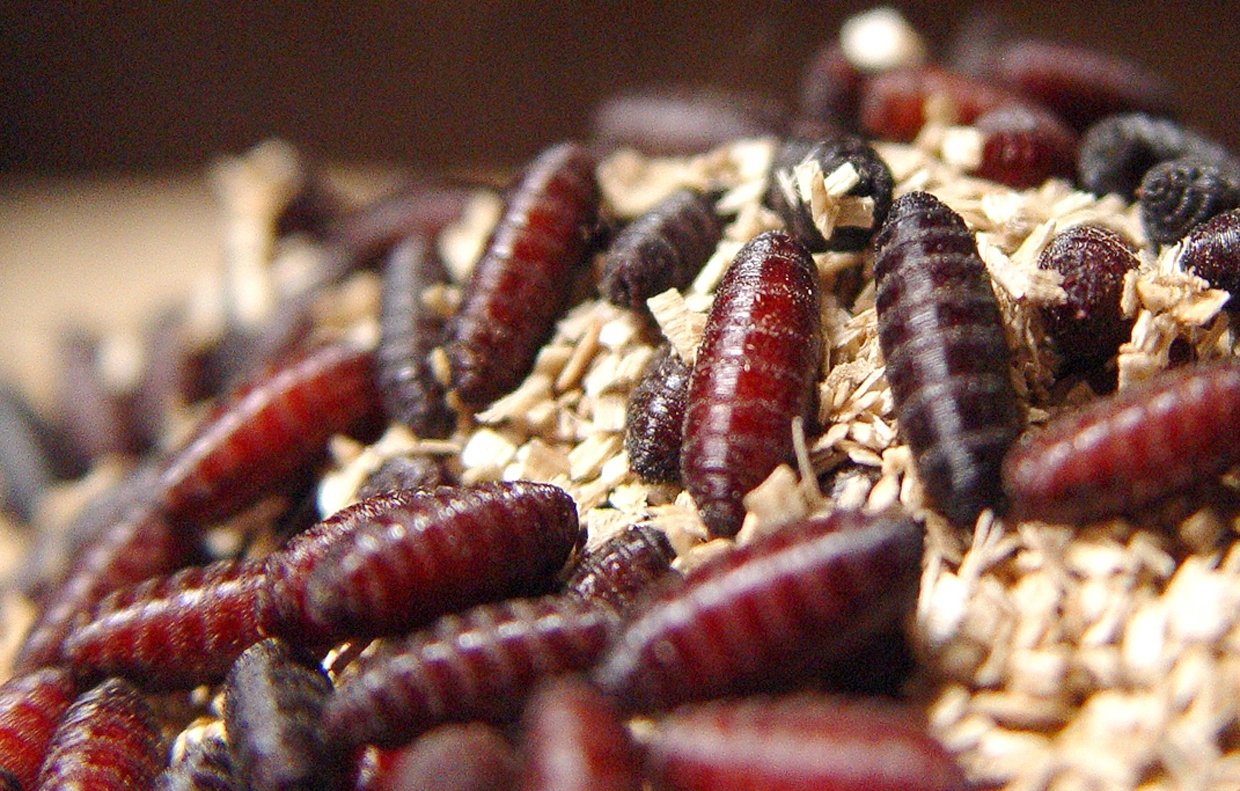
New World Screwworm pupae. Photograph: USDA
In a few words, can you tell us a bit about yourself and your journey to launching Screwworm Free Future?
Most of my career has been spent looking for neglected public health priorities and exploring how to scale approaches that can help address these challenges. This work has included neglected parasitic diseases such as female genital schistosomiasis, as well as directing impact investments to primary health care innovations at Grand Challenges Canada. Over time, I became increasingly interested in One Health and the connections between human, animal, and environmental health. I later came across a group of volunteers who were working to identify highly tractable and neglected areas of animal health. Advances in technology, combined with a clearer understanding of the New World Screwworm’s economic impact, suggested there was a real opportunity to advance screwworm control and potentially eradication in South America. Given my background, it felt like a natural extension of the skills I had been building throughout my career. I have spent a lot of time in South America, I speak Spanish and Portuguese and my mother grew up partially in Brazil, so it also felt like a meaningful place to try to make a difference. I joined as the founding Executive Director when Screwworm Free Future was formalized in 2025. I’m not a veterinarian or an entomologist but what I bring is the ability to build the coordination, partnerships, and financing that enable scientists, agencies, and technical experts to do their best work.
For those hearing about the New World Screwworm for the first time, what is it and why is it such a significant threat?
A screwworm is a parasitic fly whose larvae hatch in open wounds or body openings of warm-blooded animals. The larvae burrow into living tissue and enlarge in the wound as they feed, creating painful infestations that can quickly worsen. You can think of them as sort of screwing down into the living body of the animal – hence the name screwworm. Unlike many other botfly species, screwworm requires a living host, which is what makes it such a significant animal health and economic challenge. Infestations can cause severe pain for days and, if untreated, can lead to death from infections such as sepsis and toxemia, particularly in smaller animals. The wound that is created by the screwworm also attracts additional screwworm flies, and so the infestation can quickly grow and provide an opening for other insect species. Screwworms affect a wide range of hosts, including livestock such as cows, sheep, and goats, as well as wildlife, such as deer and, in some cases, endangered animals like tapirs and also humans.
While data on screwworm infestations in the wild is limited, there is evidence that infestations can be widespread in high-burden regions. The economic consequences are particularly significant for farmers and ranchers. This economic impact is what drove the United States, Mexico, and Central American countries to work together beginning in the 1960s to eradicate the New World Screwworm from the northern half of the Americas. That effort, supported by producer organizations, successfully established a biological barrier in Panama that helped prevent the parasite’s spread for decades – until the outbreak of the last 3 or 4 years. So, the New World Screwworm is a threat across three areas: animal health, human health, and economic security.
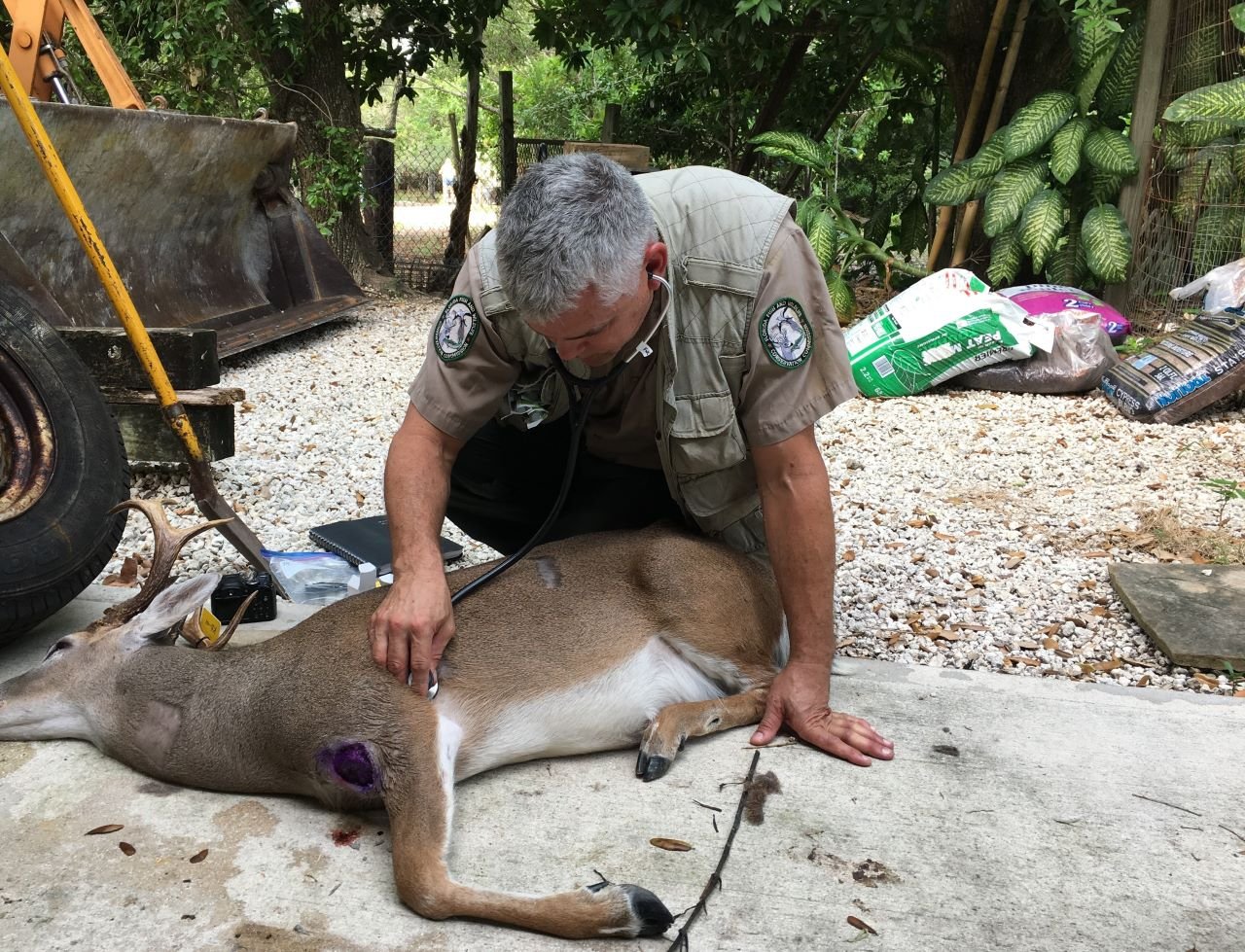
Deer infested with New World Screwworm. Photograph: USDA
The New World Screwworm recently re-emerged in the US for the first time in 60 years. How did we get here and what does this resurgence mean?
To understand the resurgence of New World screwworm, it is important to look at the history. After a multi-decade, multi-billion-dollar effort, North and Central America were declared screwworm-free in 2006. This was done using the Sterile Insect Technique (SIT), an approach that relies on breeding millions of sterile male flies and releasing them into the wild to mate with wild females, suppressing the population over time. A containment zone was established in Panama because it is the narrowest point in the Americas and therefore the most logistically feasible place to maintain this effort. The current outbreak likely began around 2021, when Panama was redesignated as affected by screwworm. From there, cases spread through Costa Rica, Nicaragua, Honduras, and Mexico, eventually reaching the United States, which recorded its first case in livestock in 60 years in June of this year.
There does not appear to be a single cause behind the outbreak, but rather a combination of factors. We know that there were operational disruptions during the COVID-19 pandemic, which affected the functioning of the sterile fly facility in Panama. We also know that there was increased movement of humans and animals through the Darién Gap – a very dense jungle area in Panama – which almost certainly included the movement of animals carrying active infestations around the biological barrier. It is also important to mention that the Darién Gap has also been experiencing land-use changes. Clearcutting for animal pastures is increasing the density of farmed animals near the barrier, which may also have increased the pressure imposed on the containment zone from farmed animals. Climate change is another important factor: warmer winters and shifting temperature patterns are expanding the environments where screwworm can survive and extending the period when the fly is active. Regions that were historically protected by colder temperatures may become increasingly vulnerable, so we need better models to understand where the fly could spread and what the consequences could be.
There are also concerns about the long-term sustainability of relying on a single sterile fly production facility. Historically, multiple facilities across the Americas supported screwworm control, but over the last several decades, those facilities have been closed. This created a single point of dependency in Panama, meaning that any disruption could have major consequences. Today, new facilities are being built rather than simply restarting existing ones, which contributes to delays in producing enough sterile flies to respond effectively to the outbreak. The larger lesson is that maintaining screwworm control requires continuous investment and operational readiness. The strategy of previous decades was to push the fly back to Panama and maintain that barrier indefinitely. We believe the strategy for the coming decades should also explore new technological approaches that can provide more sustainable solutions for the animals, economies, and communities of the Americas.

Maximillian Seunik in Salto, Uruguay at the Simposio Internacional de Garrapata. Photograph: Maximillian Seunik
Why are new tools needed to control New World Screwworm? What role could gene drive technologies play in future control efforts?
Sterile insect technique (SIT) works, and it has been the foundation of screwworm eradication efforts for decades. However, it is slow, expensive, and highly dependent on infrastructure. It requires continuously producing and releasing millions of sterile flies across very large areas. This can become challenging, especially in regions like South America, where screwworm is endemic across vast and hard-to-reach geographies.
There is a spectrum of genetic approaches being explored for their potential to address some of these challenges, including genetically modified male-only strains and precision-guided sterile insect techniques (PGSIT) which could further change the logistics of control efforts by allowing different release strategies and reducing some of the constraints and limitations of other tools. In the longer term, researchers are exploring gene drive technologies as an approach for sustained suppression of screwworm that could complement current control tools. These technologies have the potential to reach vast, hard-to-reach areas without the need for continued releases. Their successful implementation depends on a multitude of factors including regulatory approval, the need for sustained financing, and evaluation of potential ecological impacts and would require close collaboration among scientists, regulators, ecologists, policymakers, Indigenous communities, livestock producers, and other stakeholders across the region.
What is the cost of inaction? What could continued spread of the New World Screwworm mean for livestock, wildlife, public health, and economies across the Americas?
The cost of inaction is significant. In the United States, the USDA conservatively estimates that if New World Screwworm were re-established in Texas, livestock losses alone could reach approximately $1.8 to $2 billion annually. The burden is even more significant in South America, where the challenge posed by New World Screwworm has never been addressed. We know that in Uruguay, the cattle industry loses somewhere between $40 million to $150 million a year. In Brazil, it’s probably around half a billion dollars a year.
We have seen estimates that go as high as $3.6 billion a year for the continent. But this figure is from 2005, and underestimates the real burden – which is also why we have commissioned the study with the Global Burden of Animal Disease Program. We also know that in countries in North and Central America where historically we have had the most accurate data, eradication and control campaigns delivered a return on investment of somewhere between $5 to $50 for every $1 invested. The risk of inaction extends beyond economic losses. Every year that we do not make progress on advancing screwworm control and eradication in South America, the flies’ range will grow because of climate change. This means that eventual control efforts will become more complex and costly. The political will to fund a perpetual control program is likely to erode further as a result. Inaction today guarantees a larger, costlier emergency later.
What is Screwworm Free Future trying to achieve? And what are some of the challenges it faces in achieving its mission of a screwworm-free future?
Screwworm Free Future seeks to chart a pathway towards hemispheric control and eradication of the New World Screwworm. We collaborate with leading scientists to explore how innovations, including genetic biocontrol, can be responsibly applied to screwworm control. We believe there is an enormous opportunity to help deliver the same benefits that North and Central America have experienced for decades to South America, where the New World Screwworm continues to pose significant threats to livestock, wildlife, and livelihoods.
Achieving a screwworm-free future, however, will require overcoming several major challenges. This is a huge effort that will require substantive collaboration, including with a number of multilateral organizations. Currently, no single actor has the mandate to coordinate this effort. That is why we are keen to help in an interim capacity by bringing stakeholders together and fostering greater collaboration. Rather than continuing with a narrow focus on national responses, we believe a coordinated hemispheric approach is needed.
Another major challenge is building the scientific, regulatory, and social foundation needed for future control tools. Emerging technologies, including genetic biocontrol, require further research, ecological assessment, regulatory pathways, and public engagement. To support this, we have been directing funding towards some high-impact, underfunded areas of research, including quantifying the economic burden of screwworm. So, for example, we are working with the Global Burden of Animal Disease team at the University of Edinburgh on the most comprehensive analysis of the economic losses from screwworm. There are also several other areas where funders could partner with us to direct capital to near-term, high-impact opportunities. We have developed a strategic research agenda that identifies a range of priorities. These include understanding ecological considerations of removing screwworm from South America, assessing the impacts of climate change, and supporting social perceptions workshops on screwworm.