15Sep 26
Coral reefs are among the most biodiverse ecosystems on Earth, supporting at least one quarter of all marine species while providing food, coastal protection, and livelihoods for hundreds of millions of people. Yet over half of the world’s reefs have been lost in recent decades as casualties of climate change, disease outbreaks, and compounding human pressures. There is no single solution. Efforts to protect what remains and restore what has been lost are underway, but they are racing against time.
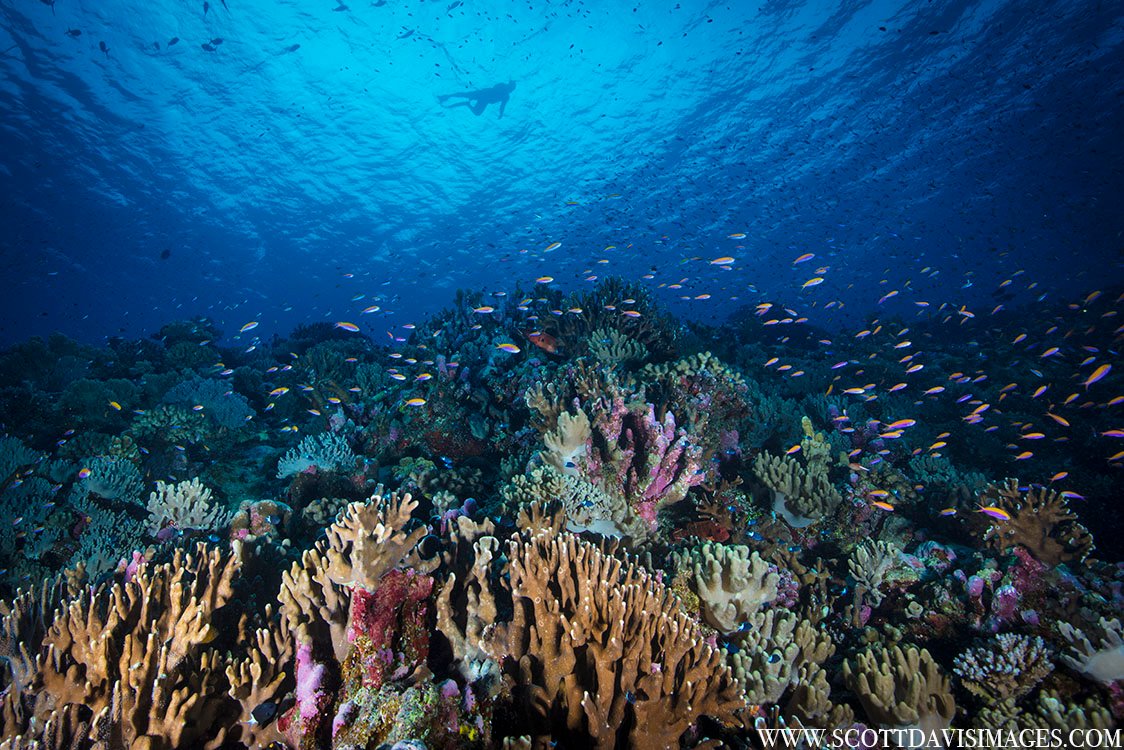
A healthy coral reef in Ulithi, Micronesia. Photograph: Scott Davis Images / One People One Reef.
Because reefs are so deeply intertwined with the lives and livelihoods of coastal communities, conservation efforts are most effective and enduring when local communities are not just beneficiaries, but active participants and decision-makers. At the same time, what works in one place rarely translates wholesale to another. Species composition, connectivity patterns, and environmental conditions all vary from reef to reef and region to region. Add distinct laws, customs, and local capacity, and it becomes clear that local knowledge and context are essential.
This year’s International Day for Biological Diversity theme, “Acting locally for global impact” captures this idea perfectly. To protect reefs at scale, we need to invest in locally grounded, context-specific solutions, and then connect those efforts so that knowledge, tools, and lessons learned can travel far beyond any single place or organization. We need to try many things in many places, and be deliberate about sharing what works.
At Revive & Restore, this is the philosophy behind our Advanced Coral Toolkit (ACT) program: pairing cutting-edge science with local reef restoration and management, and building a global community of practice where researchers, practitioners, and decision-makers can learn from one another and accelerate progress together. Here are two examples of how local action is already generating global impact.
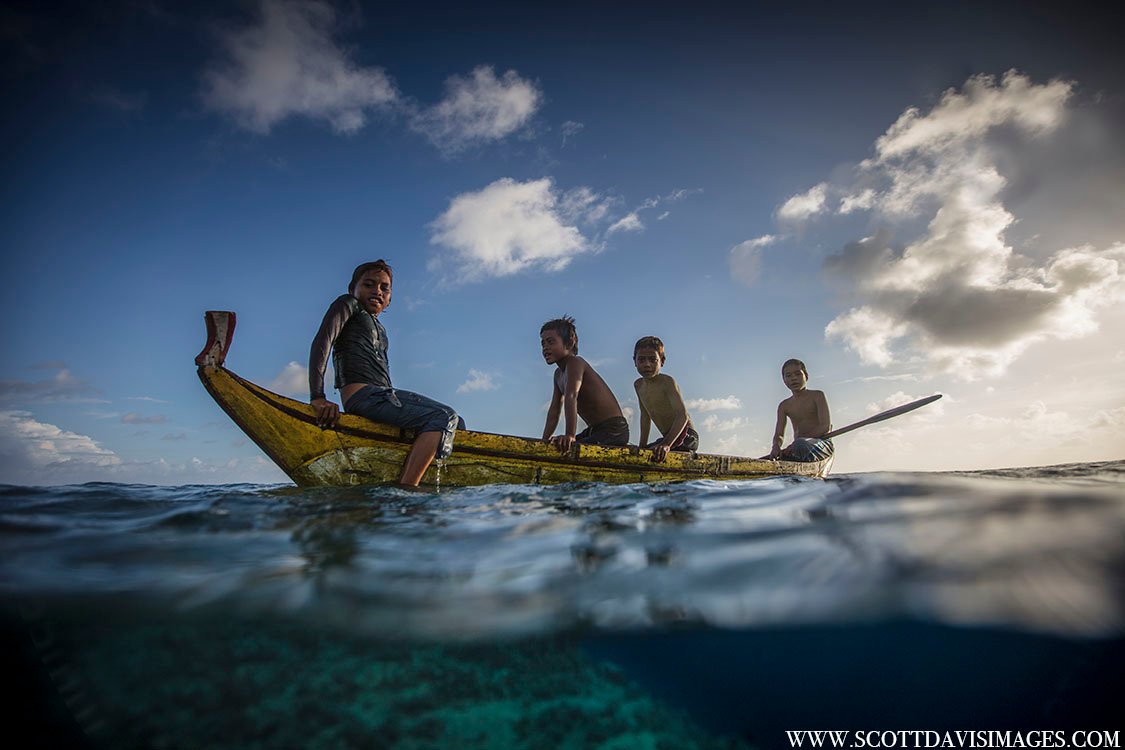
Children fishing near coral reefs in the Ulithi atoll in Micronesia, where these ecosystems have been managed using traditional knowledge and practices for many generations. Photograph: Scott Davis Images / One People One Reef.
One People One Reef: Bridging Traditional Knowledge and Genomics
Funded by the ACT, an initiative led by One People One Reef is a compelling example of what happens when science and traditional ecological knowledge are intentionally brought together. Working in close partnership with communities in Ulithi Atoll, Federated States of Micronesia, the project demonstrated what it takes to co-develop reef conservation strategies that are both technically sophisticated and deeply rooted in place.
The team deployed advanced genomic and ecological tools, many of which were specifically adapted for field use. Using portable technology, whole genome sequencing revealed that Ulithi’s reef system is highly interconnected, with strong east-west currents facilitating larval movement across the atoll. That finding was immediately actionable: combining genetic connectivity data with community knowledge of reef use and conditions, the community identified the eastern reef as a critical source area and established a no-take zone to protect it. This designation became part of the broader Ulithi Atoll Marine Respected Area, now likely the largest traditionally governed protected area in the Federated States of Micronesia.
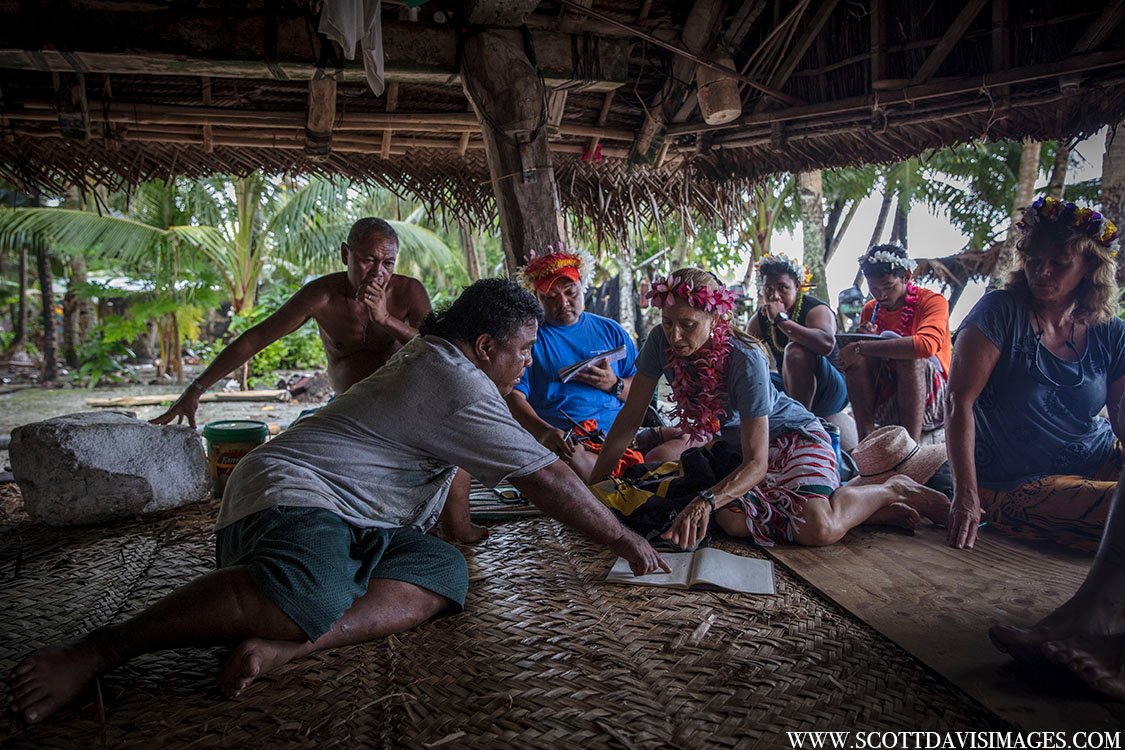
Members of One People One Reef working together with Ulithian community members to co-design reef management solutions that combine traditional knowledge with genomic tools. Photograph: Scott Davis Images / One People One Reef.
Beyond connectivity, environmental DNA (eDNA) metabarcoding provided an efficient approach to monitoring biodiversity and detecting seasonal patterns in fish communities, patterns that closely aligned with observations the community had been making for generations. Metabolomics and proteomics helped identify early indicators of coral stress. Isotopic analyses shed light on coral nutrition and the roles of key fish species. High-resolution 3D reef models revealed how structural complexity supports fish diversity and created detailed baselines for long-term monitoring.
For each technology, community observations guided where and how sampling happened, and scientific findings provided new ways to validate and expand local understanding of reef dynamics. That integrated knowledge base enabled more informed, more confident decision-making. The result is a durable, community-driven management framework that reflects both cultural values and ecological realities. The project also catalyzed ongoing stewardship through “Ulithi Hofagie Wagey,” a collaborative group bringing together youth and elders to sustain conservation leadership across generations. The framework that One People One Reef created in Ulithi is now being adapted for use on the island of Yap, and holds promise for other locations.
One People One Reef shows what’s possible when deep local knowledge and advanced, accessible scientific tools are combined to co-design solutions. By demonstrating that sophisticated technologies can be successfully deployed in remote settings and used by and with local communities, this project offers a pathway that can be adapted and scaled globally.
Kenya: Building local capacity for coral genomics
Kenya’s reefs are among the most biodiverse in the Western Indian Ocean, and restoration efforts are ramping up across the country. But genomic data on corals in the region are severely limited, leaving practitioners to decide which corals to collect, breed, and outplant with very little information about genetic diversity, resilience, or adaptive potential.
This gap reflects a familiar pattern: historically, reef genomics has often been done by international experts who fly in to study local reefs, take samples, and leave. That model doesn’t build local capacity or ensure that communities control their own conservation knowledge.
Led by Dr. Sammy Wambua at Pwani University, a new project funded by our Advanced Coral Toolkit is designed to flip this model. In partnership with REEFolution, the Kenya Wildlife Service, and the Wildlife Research & Training Institute, the team is using cost-effective sequencing approaches (low-coverage whole genome sequencing, RADseq, and long-read methods) to identify diagnostic genetic markers across nine coral species currently under restoration along Kenya’s coast. Those markers will be translated into standardized, field-deployable PCR protocols that local restoration practitioners can use for accurate species identification without needing expensive genomic infrastructure.
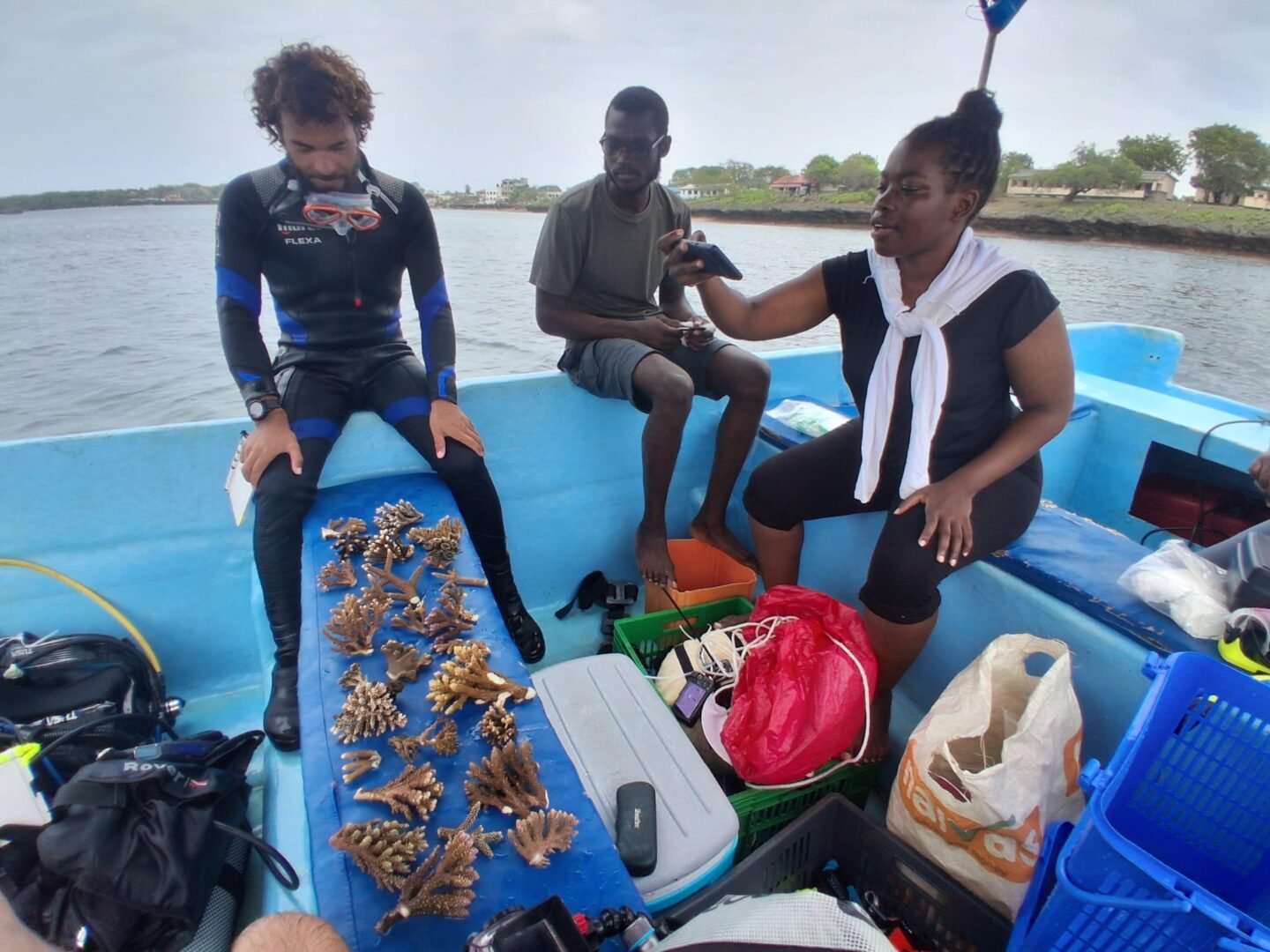
Workshop participants representing local research organizations, NGOs, and government agencies receive hands-on field training to collect and identify coral samples in southern Kenya. Photograph: Dr. Sammy Wambua.
To ground the work in the realities of Kenya’s restoration community, the team convened a multi-day workshop bringing together government officials, researchers, conservation practitioners, and community members. Participants received both technical laboratory training and hands-on field training, learning to collect and process coral samples and building in-country capacity for species identification, genetic analysis, and specimen archiving.
Once local practitioners have access to accurate genetic data, they can make far more informed decisions about sourcing, outplanting strategies, and long-term monitoring. The genomic data will also establish a foundation for understanding coral diversity and resilience across Kenya’s coast, helping identify which species and genotypes perform best under different environmental conditions. That kind of place-specific, evidence-based knowledge enhances restoration success.
Critically, Kenyan students are being trained, institutions are being equipped, and the technical infrastructure and human expertise needed for coral genomics are being built in a previously underserved region. This project could serve as a model for translating molecular tools into practical conservation applications in other historically under-resourced geographies where scientifically informed restoration is urgently needed.
Connecting local action to global impact
Across these projects, a common thread emerges: meaningful conservation happens at the local level, but its impact doesn’t have to stop there.
More than 100 nations have coral reefs, each with distinct ecosystems, political and cultural contexts, and conservation challenges. While this complexity can be daunting, we should embrace this diversity as an asset rather than a barrier. By investing in locally tailored solutions and connecting them through a shared network, we create a powerful engine for learning and innovation.
Through the Advanced Coral Toolkit (ACT) program, Revive & Restore is working to build this global community of practice, linking researchers, restoration practitioners, and reef managers across geographies to exchange knowledge, refine tools, and accelerate progress together. Insights from one country inform efforts in another. Approaches that successfully integrate community knowledge inspire similar models elsewhere. That’s how we scale impact: not by a few entities bringing one approach everywhere, but by empowering people everywhere to advance and innovate their own.
On this International Day for Biological Diversity, the message is clear: protecting coral reefs requires both local action and global collaboration. When we ground our efforts in the realities of each reef and the communities connected to it, and connect those efforts across geographies, we create the conditions for conservation that actually last.