15Sep 26
Malaria remains a major public health issue in Uganda, with over 90% of the population at risk. The latest data from the World Health Organization’s World Malaria Report revealed that Uganda’s malaria burden increased to over 13 million cases in 2024, an increase of more than 600,000 cases from the previous year.
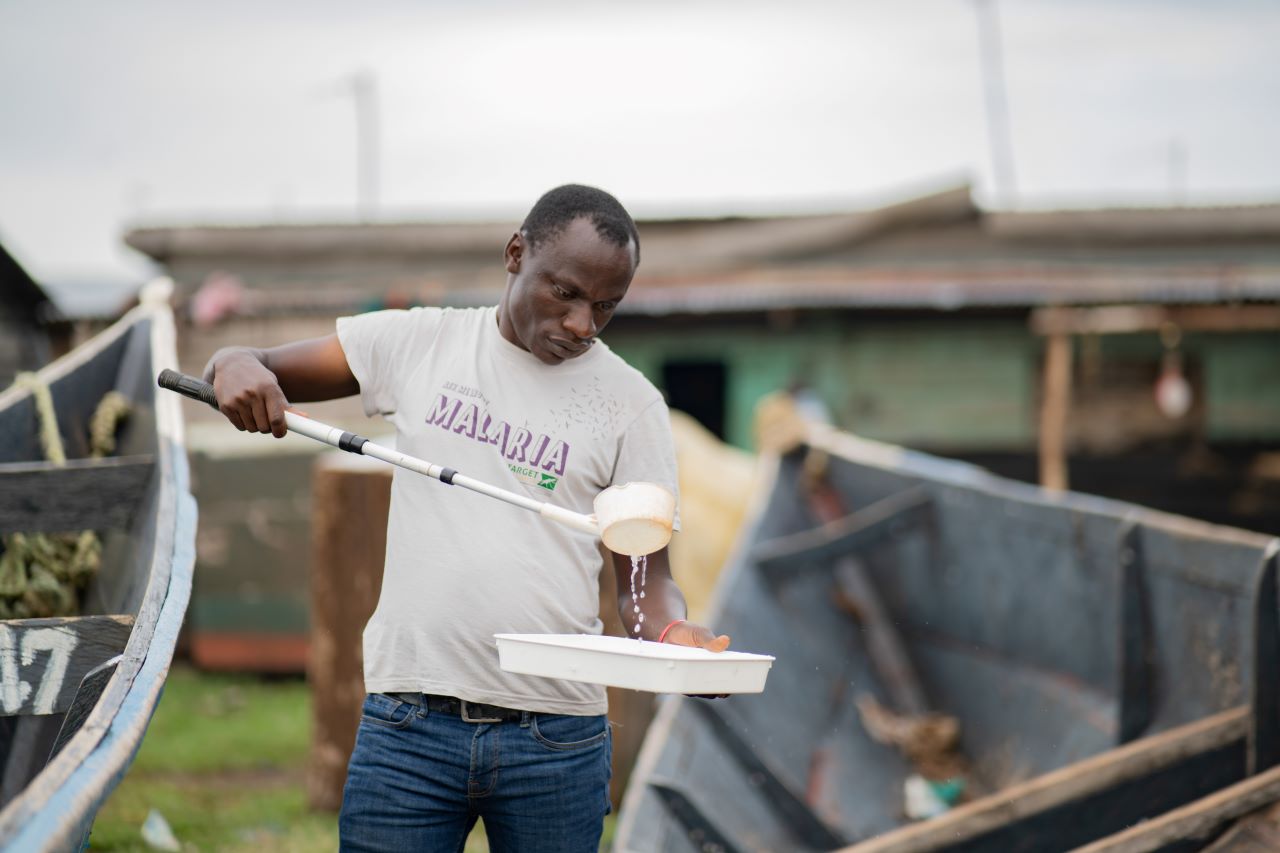
Target Malaria Uganda team member conducting mosquito larvae collections. Photograph: Target Malaria
Malaria is very hard to eliminate. Following years of progress against the disease, challenges such as rising resistance to available interventions, funding cuts, and shifting disease transmission patterns brought on by climate change, are increasingly complicating malaria control efforts and threatening to reverse hard-won gains across the African region.
At Target Malaria, we are working to develop an innovative technology to reduce the population of malaria-transmitting mosquitoes in sub-Saharan Africa. By reducing the population of malaria mosquitoes, we aim to reduce the transmission of the disease.
Advancing malaria control research at the Uganda Virus Research Institute (UVRI)
Our team in Uganda is based at the Uganda Virus Research Institute (UVRI), in Entebbe, and led by Principal Investigator Dr. Jonathan Kayondo. We are a multidisciplinary group of qualified insectary staff, scientists, and engagement and communication experts.
Our activities in Uganda began in 2012 under the Department of Entomology and Vector Biology. Since then, part of our work here has focused on entomological mosquito collections from mainland sites and field sites on islands on Lake Victoria. The collections are done in collaboration with local communities who live in these sites. Once collected, the mosquitoes are analysed in our laboratory. This work allows us to better understand the characteristics of local malaria mosquitoes and generate data that informs the project’s research.
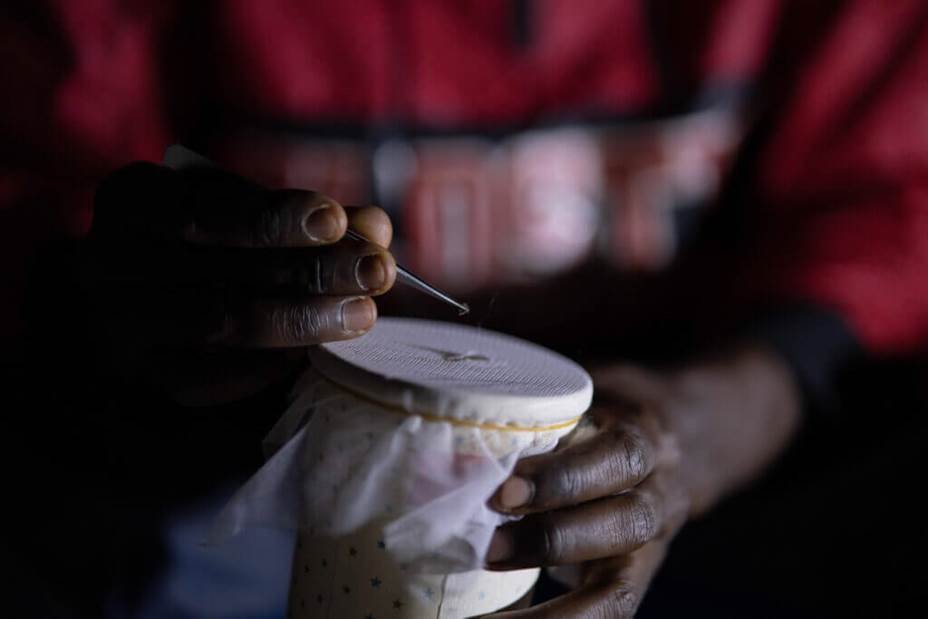
Mosquito sample being added into a collection cup. Photograph: Target Malaria
In July 2019, we inaugurated a new ACL-2 (Arthropod Containment Level 2) insectary. The facility – which meets international guidelines and national regulations for the containment of insects – enables us to safely rear, maintain, and study mosquito populations under controlled conditions, to better understand their biology and behavior.
Current work in the insectary involves conducting studies in containment on a strain of non gene drive genetically modified male bias mosquitoes. These mosquitoes have been genetically modified to produce mainly male offspring. Work on the male bias mosquitoes is an intermediary step in Target Malaria’s stepwise approach to develop a new tool to fight malaria. It supports our objectives to strengthen our team’s capacity in Uganda to rear and study genetically modified mosquitoes, advance preparations for future research phases, and continue engaging regulators and stakeholders on our regulatory pathway.
A global partnership connecting expertise across Africa, Europe and North America
Our research at Target Malaria requires the participation of many experts – as no single institution has the knowledge or research environment necessary to succeed alone. Our team at the Uganda Virus Research Institute works in partnership with institutions based in the UK, US and Italy, including Imperial College London, the Centers for Disease Control and Prevention (CDC), and Polo GGB.
All our teams work closely together, with each step of our technology’s development and evaluation informed by collective research and evidence. These partnerships have helped us build a center of knowledge and excellence for research on genetic technologies in Uganda. Since partnering with Target Malaria, we have steadily built capacity for potential future work on gene drive mosquitoes, learning from and collaborating with colleagues across countries. These partnerships support knowledge exchange, technical support, technology transfer, training and shared learning.
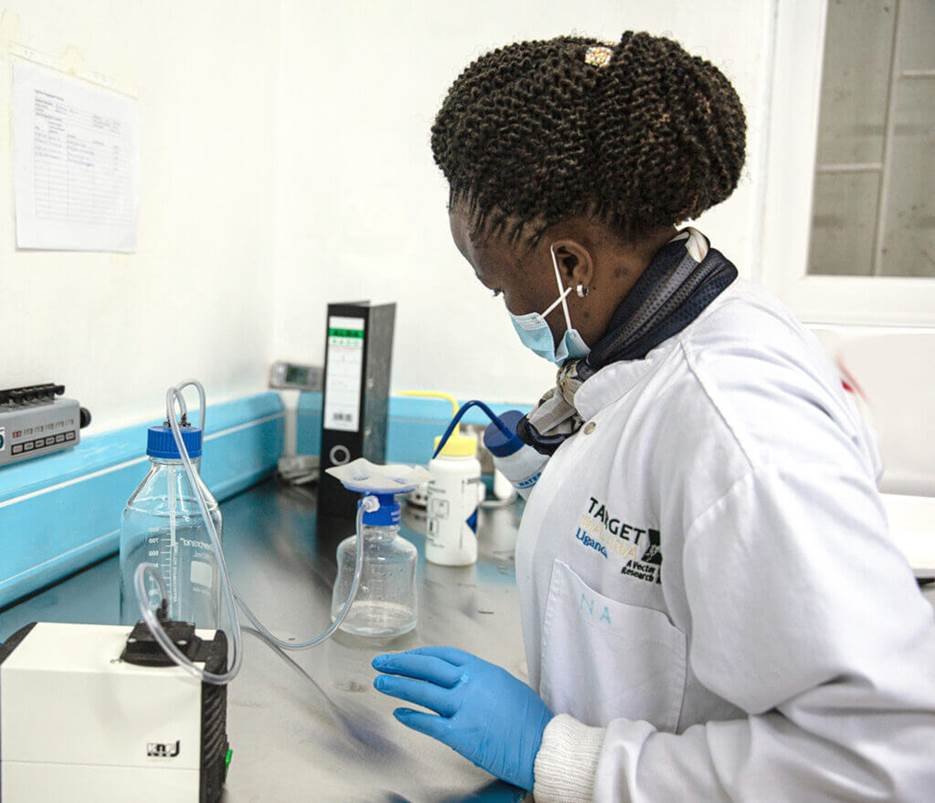
Target Malaria Uganda insectary staff bleaching mosquito eggs in the insectary at UVRI. Photograph: Target Malaria
Collaboration in action: from policymakers to communities
As part of our work, we engage regularly with several stakeholders at different levels: public health agencies (for instance National Malaria Control Programs, Ministries of Health), relevant regulatory authorities, and other research institutions and civil society organisations, to ensure awareness about our research and its potential as a new tool for vector control for malaria.
Local communities affected by our research are at the centre of our stakeholder engagement approach. We have been engaging local communities from the start of our work in Uganda. Part of this engagement aims to ensure communities can make an informed decision about project activities and that these decisions are properly recorded. At each phase of our technology development, we work closely with local participating communities to ensure that no activity goes ahead without their agreement. Their input, knowledge, and perspectives also help shape the research itself.
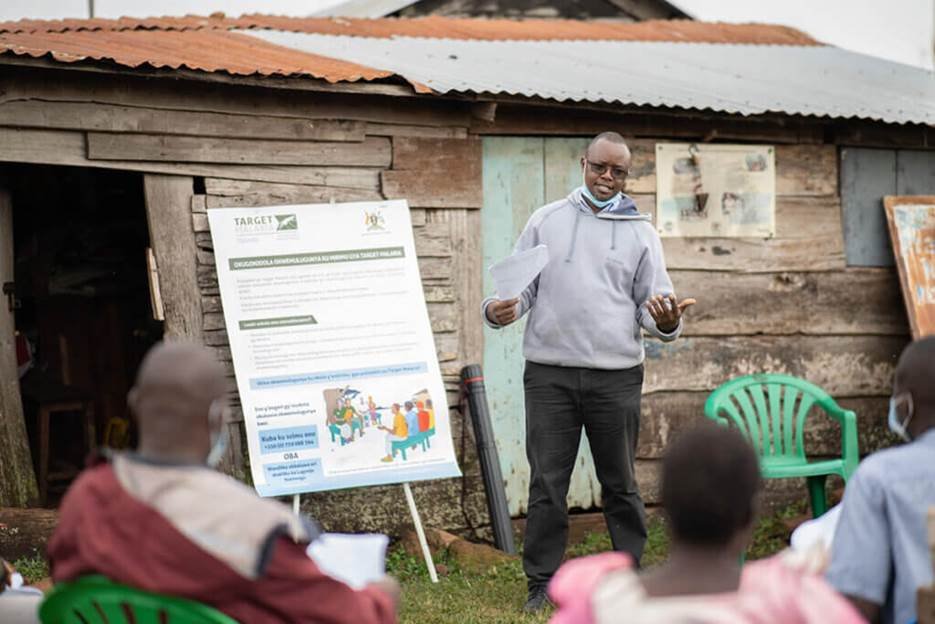
Stakeholder engagement officer from Target Malaria Uganda engaging local communities. Photograph: Target Malaria
All steps of our project are conducted in line with national regulations and ethical standards, including obtaining the appropriate individual consent or community agreement, alongside regulatory approvals. Following extensive engagement, communities around the UVRI campus have expressed their agreement for the research program to be carried out in the insectary.
But our engagement goes beyond what is required by law because we see engagement as a process of co-development that helps us improve our research.
Malaria continues to place a heavy burden on Uganda’s health systems as well as on its social and economic development. For many living in Uganda and across the African region, malaria remains a daily reality. As challenges grow and drug resistance intensifies across the continent, bold action and new tools are urgently needed. By investing in local capacity, fostering collaboration, and engaging openly with communities, we can accelerate progress toward a malaria-free future. Uganda’s scientists are not just part of the journey toward this future, they are helping lead the way.