17Mar 26
A recent paper published in Nature Reviews Biodiversity shows how seabirds act as connectors between marine and terrestrial ecosystems and why protecting them is a powerful opportunity to tackle biodiversity loss and other related crises. Led by Dr Holly Jones of Northern Illinois University, with contributions from global experts and conservation leaders including BirdLife International, The Nature Conservancy, Lancaster University, and Island Conservation, the study examines seabirds’ role across island and ocean ecosystems and introduces the concept of the “circular seabird economy”.
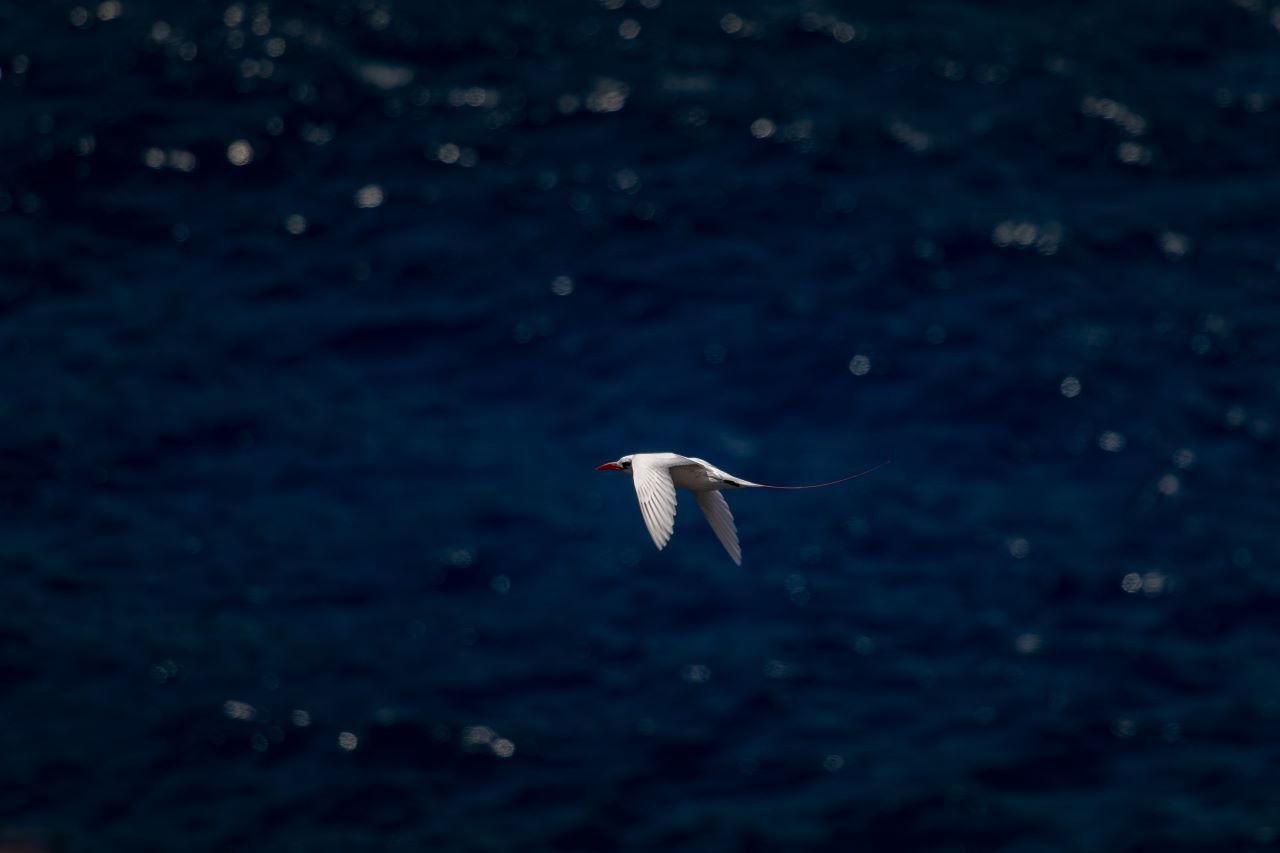
Tropicbird on Lehua Island, Hawaii. Photograph: Island Conservation
Although seabirds spend the majority of their lives at sea, they return to islands to breed, forming colonies of thousands. These gatherings are not just spectacles of nature; they result in the movement of massive amounts of dietary-derived marine nutrients which are deposited on islands in the form of guano, feathers, eggshells, and carcasses.
And the story doesn’t end on land. These nutrients then wash back into the ocean, supporting coral growth, bolstering fish biomass, and enhancing the resilience of marine ecosystems to the effects of climate change. We describe this process as the “circular seabird economy”, where seabirds transfer nutrients from ocean to land and back again, shaping biodiversity and ecosystem health across vast scales.
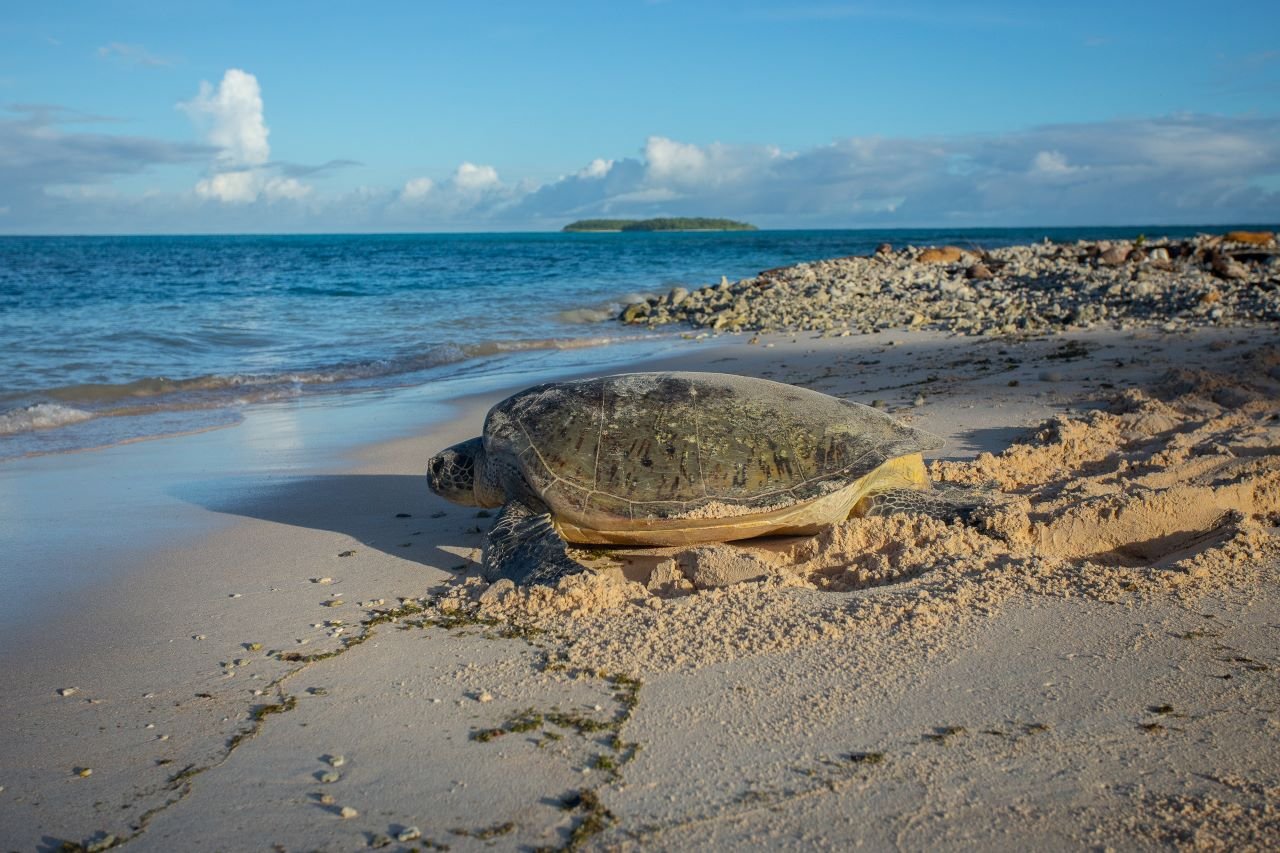
Green sea turtle on Loosiep Island, Turtle Islands. Photograph: James Reardon for Island Conservation
Yet nearly one-third of all seabird species are at risk of extinction, making them among the most threatened birds globally. Despite the crucial role seabirds play in supporting both island and marine biodiversity, many of the ways seabird influence marine ecosystems remain understudied.
Our review also pinpoints knowledge gaps in overlooked habitats. Knowledge about seabird nutrient effects is patchy, and several critical habitats such as mangroves, reefs, oyster beds and seagrass beds are understudied even when seabird benefits have been established. Future research must address these spatial and temporal gaps by fostering a more integrated marine-terrestrial perspective.
Seabird restoration is one of the most effective conservation methods for supporting both island and marine ecosystem health. While impacts have been difficult to measure due to logistical and technical constraints, emerging tools such as satellite data, remote sensing, eco-acoustics, and environmental DNA (eDNA) are improving our ability to track seabird populations and quantify their ecosystem effects.
Other innovations such as gene drive technologies could help control invasive rodents on islands, which prey on eggs, chicks and even adult seabirds. Removing these predators has been shown to re-establish the circular seabird economy in many instances.
The circular seabird economy faces multiple ongoing threats from climate change, overfishing, and pollution. Our review offers further confirmation that investing in seabird restoration and the science that supports it can unlock powerful co-benefits for nature and the coastal communities that rely on seabirds for their livelihoods.
Learn more about the important role seabirds play on land and in the sea by visiting Island Conservation‘s website.