12Nov 26
On the sidelines of the UN Biodiversity Conference 2026 (including COP 17, CP-MOP 12, and NP-MOP 6) in Yerevan, the Foundation for the National Institutes of Health (FNIH)’s GeneConvene Global Collaborative organized the side event: From Guidance to Practice: Building Capacity for Risk Assessment of Living Modified Organisms. Moderated by Prof. Aggrey Ambali, Institute on Ethics & Policy for Innovation (IEPI), the session brought together regulators, scientists, and biosafety stakeholders to discuss what it takes to turn international guidance into functioning national risk assessment systems.
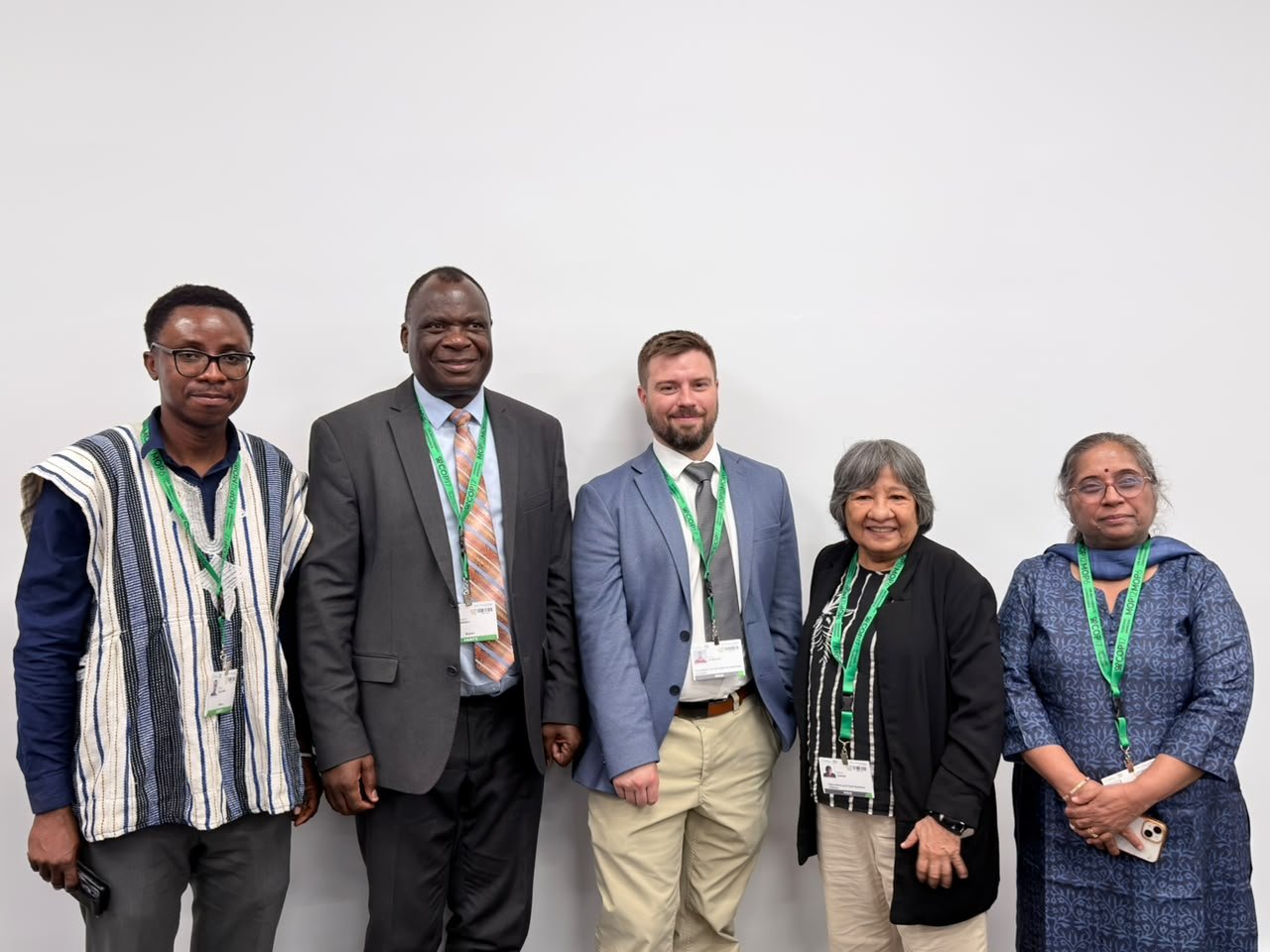
Speakers and chair of the side event “From Guidance to Practice: Building Capacity for Risk Assessment of Living Modified Organisms” in Yerevan, Armenia.
At CP-MOP 11 in 2024, Parties adopted decision CP-11/7, welcoming the Additional voluntary guidance materials to support case-by-case risk assessments of living modified organisms containing engineered gene drives, published as Biosafety Technical Series No. 7 (BTS #7), and encouraged their use to strengthen risk assessment capacity. Although developed for gene drive technologies, the problem formulation approach at its core (defining protection goals, identifying potential harms, mapping pathways to harm, and formulating risk hypotheses) applies far more broadly, including to microorganisms and fish. Guidance alone, however, is not enough. Effective risk assessment also depends on trained personnel, laboratory infrastructure, LMO detection capability, institutional coordination, and regional cooperation.
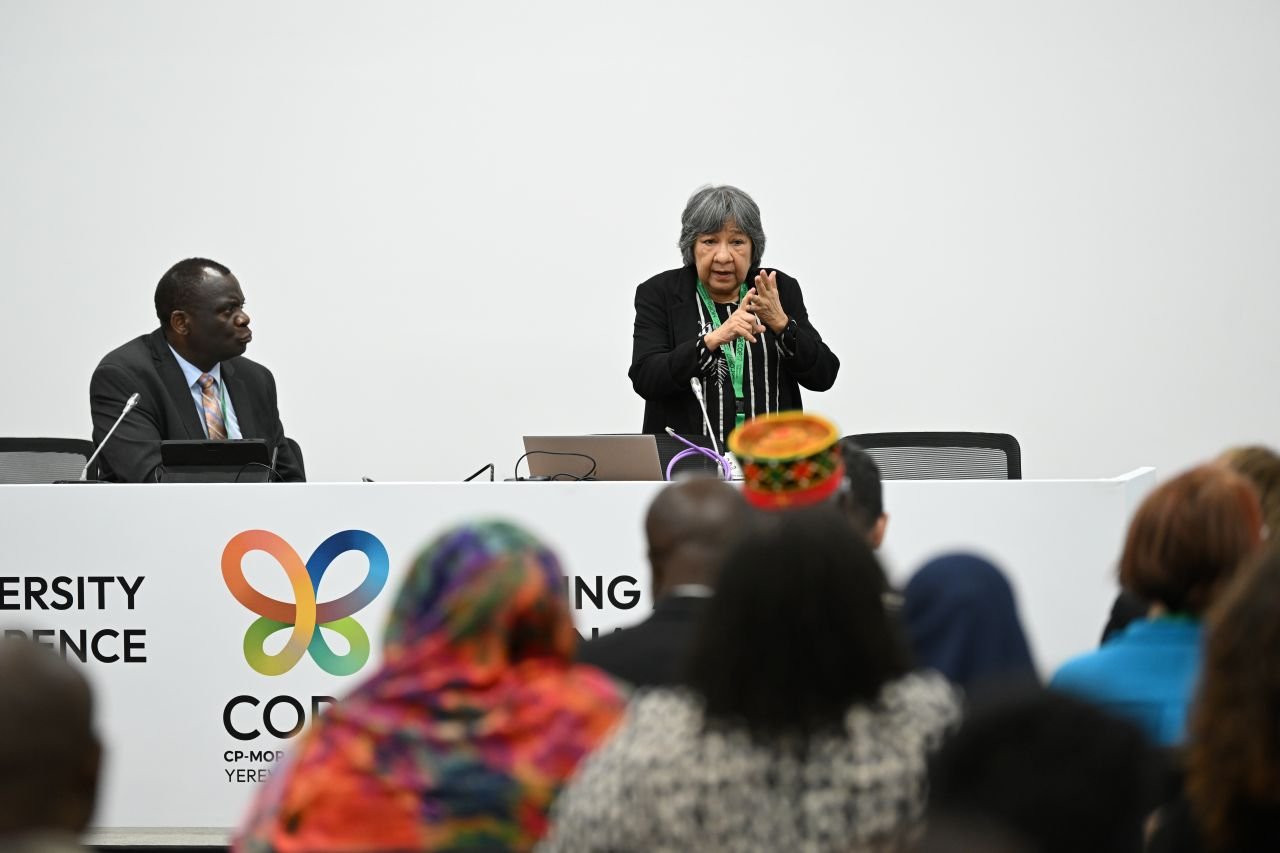
Dr. Flerida A. Carino, University of the Philippines Diliman, presenting at the side event “From Guidance to Practice: Building Capacity for Risk Assessment of Living Modified Organisms” in Yerevan, Armenia. Photograph: Secretariat of the Convention on Biological Diversity‘s Flickr album.
Dr. Flerida A. Carino, University of the Philippines Diliman, described how the Philippines built its biosafety system. In 2002, the Philippines became the first country in Southeast Asia to approve a biotech crop for commercial cultivation. With limited international guidance documents available at the time, regulators learned on the job, following best practices by consulting scientists, plant breeders, farmers, local government, special interest groups, and international regulators. Dr. Carino noted that the framework in CBD’s recent guidance materials for gene drive risk assessment is transferable well beyond gene drive technologies and stressed that “moving from guidance to practice” requires building a sustainable biosafety ecosystem.
Dr. Vibha Ahuja, BioSETU Consulting, India, noted that standardized concepts such as problem formulation and comparative assessment give countries a sound starting point, sparing them from building frameworks from scratch. She outlined several challenges in adapting risk assessment guidance to national contexts. These include a lack of institutional continuity, which can lead to the loss of institutional memory, as well as uneven technical capacity across regions. To strengthen risk assessment capacity, she recommended developing context-specific risk scenarios, widening access to tools and training programs, and establishing regional hubs where countries with similar regulatory systems can learn from one another.
Dr. Daniel Osei Ofosu, Ghana Atomic Energy Commission (GAEC), spoke about building risk assessment capacity in Africa. He stated that although nearly every African country is a Party to the Cartagena Protocol, many initially had little or no institutional capacity to assess biotechnology applications. He explained that countries first focused on legal capacity by putting biosafety laws in place, then on establishing institutional authorities, and finally on training assessors and decision-makers to build technical capacity. National framework projects, regional centers of excellence, and continental coordination through AUDA-NEPAD have since helped countries such as South Africa, Nigeria, Kenya, and Ghana move from laws on paper to actual regulatory decisions and African countries are now producing their own guidance documents. Progress has been uneven, however: countries with political commitment, stable institutions, and sustained investment have advanced, while others still face policy uncertainty and limited resources. Dr. Ofosu highlighted hands-on experience as key to skills transfer and shared two lessons: national ownership and leadership are essential for international guidance to be put to good use, and risk assessment capacity requires continuous investment to build sustainable regulatory competence.
My contribution focused on what accessible training for regulators can look like. Effective capacity building means learning that sticks, supported by accessible resources people can return to and reuse. Bite-sized, asynchronous learning allows established professionals to learn at their own pace rather than trying to absorb everything during a short workshop. With the GeneConvene Global Collaborative, we are developing the GeneConvene Academy, an online learning platform planned for launch in the second quarter of 2027. Its first expert-curated course, which I developed with my colleague Brinda Dass, is built directly on BTS #7 and follows the guidance from problem formulation through risk characterization to monitoring. Rather than offering a one-size-fits-all course, the platform maps each learner’s existing knowledge and offers targeted short courses to fill the gaps. AI helps learners find relevant courses, get answers to their questions, and track their progress, while experts remain the authority on content and national regulators remain in charge of decisions. Our aim is to turn guidance that Parties have already welcomed into continuous, low-bandwidth learning that outlasts any single workshop.
Across the presentations, one message was consistent: turning biosafety guidance into practice requires long-term investment in people, institutions, and partnerships.